
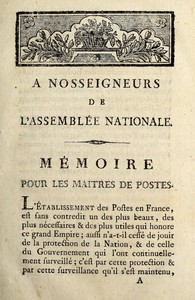
A Nosseigneurs de l'Assemblée nationale: Mémoire pour les maîtres de postes
Let's set the scene: France, sometime in the late 1700s. The air is thick with talk of revolution, but before the guillotine drops, there's paperwork. A Nosseigneurs de l'Assemblée nationale: Mémoire pour les maîtres de postes is exactly that—a formal piece of paperwork. It's a petition written by an anonymous author, pleading the case for the 'maîtres de postes,' the masters of the postal relay stations.
The Story
There isn't a traditional plot with heroes and villains. Instead, the 'story' is the argument itself. The anonymous writer acts as a lawyer for these station masters. Their job was huge: they provided fresh horses, lodgings, and security for couriers carrying everything from love letters to state secrets across the kingdom. The book lays out their grievances: they're drowning in debt, their privileges are being stripped away, and the entire ancient system is crumbling. They argue that without them, France itself will grind to a halt. It's a portrait of a profession fighting for its life, making a last-ditch effort to convince the powerful new government that they are not obsolete, but essential.
Why You Should Read It
You should read it because it turns history inside out. We usually learn about kings, philosophers, and battles. This book is about the infrastructure—the people who made the thoughts and orders of the great figures actually travel. Reading their plea, you get this incredibly human, ground-level view of history. You feel their anxiety and their pride. It’s like finding a detailed, passionate memo from a union leader right before their industry gets automated. The anonymity of the author adds a layer of mystery. Were they a station master themselves? A sympathetic clerk? This personal, urgent voice from the shadows makes the past feel immediate and real.
Final Verdict
This is not a book for everyone. If you want a fast-paced novel, look elsewhere. But if you're the kind of person who loves untold stories, social history, or primary sources that breathe, this is a hidden gem. It's perfect for history buffs who want to move beyond the textbooks, for anyone fascinated by how societies actually function (and dysfunction), and for readers who enjoy the puzzle of an anonymous text. Think of it as a fascinating, eloquent footnote to the French Revolution that somehow manages to be a whole story in itself.
This digital edition is based on a public domain text. It is now common property for all to enjoy.
Margaret Johnson
2 years agoSurprisingly enough, it creates a vivid world that you simply do not want to leave. One of the best books I've read this year.
Betty Allen
1 year agoWow.
Elizabeth Lopez
1 year agoA must-have for anyone studying this subject.
Daniel Rodriguez
11 months agoI started reading out of curiosity and it creates a vivid world that you simply do not want to leave. Exceeded all my expectations.








Barbara Williams
1 year agoBeautifully written.