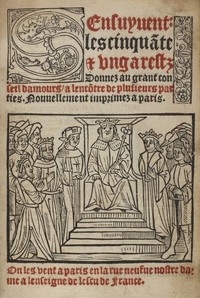
Les cinquante et ung arretz d'amours by d'Auvergne Martial
Okay, let's set the scene. It's France, the late 1400s. Instead of small claims court, imagine a 'Court of Love' where the laws are about passion, not property. Martial d'Auvergne, a real-life lawyer, wrote this series of 51 fictional cases and rulings. He basically invented a legal system for affairs of the heart.
The Story
The book doesn't have one continuous plot with main characters. Instead, it's a collection of case files. Each 'arrest' or judgment starts with a problem: A knight promises to marry a lady, then backs out. A wife is accused of being too friendly with another man. A lover sends mixed messages and causes heartache. These 'plaintiffs' and 'defendants' bring their emotional disputes before the court. The judges, a mix of allegorical figures like the God of Love and historical nobles, listen to the arguments, reference the 'code of love,' and hand down a verdict. Sometimes the ruling is strict, sometimes forgiving, but it always tries to define what's 'right' in the messy world of romance.
Why You Should Read It
What grabbed me was how modern the problems feel. Sure, the language is old and the setting is full of knights and ladies, but the core issues—broken promises, jealousy, unclear intentions—are timeless. It's a brilliant mix of serious medieval law and playful satire. D'Auvergne uses his real legal knowledge to build this whimsical court, poking fun at both love's irrationality and law's rigidity. You get to see the social rules of the time laid bare: what was expected of men and women, how honor worked, and how people navigated love within (or outside of) marriage. It's history, but it's not dry. It's full of human drama.
Final Verdict
This book is perfect for history buffs who want to go beyond kings and battles into the social and emotional lives of people. It's also great for anyone who enjoys quirky, concept-driven stories. If you like books that make you think 'how did someone even come up with this idea?', you'll appreciate it. It's not a page-turning adventure, but more of a slow, fascinating conversation with the past. Be prepared for the older style of writing, but push through—the insights into love, then and now, are absolutely worth it.
This text is dedicated to the public domain. Share knowledge freely with the world.