
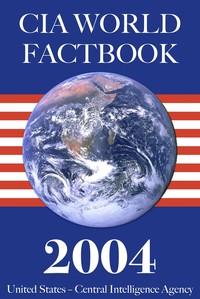
The 2004 CIA World Factbook by United States. Central Intelligence Agency
Let's be clear from the start: this isn't a book with characters or a plot in the traditional sense. The 2004 CIA World Factbook is a massive, hyper-detailed almanac of every country on Earth, as compiled by U.S. intelligence analysts. For each nation, you get a standardized breakdown: geography, people, government, economy, communications, and military. It's 700+ pages of maps, flags, statistics, and concise summaries.
The Story
The 'story' is the state of the world in 2004. Reading it is like stepping into a time machine. You see a world where China's economy is described as 'largely rural' and its military might is noted but not yet the central focus it is today. You see the fresh entries for newly independent Timor-Leste and Serbia & Montenegro. The data captures the immediate aftermath of the Iraq invasion, the early years of the Afghan war, and the dawn of the Eurozone. There's no narrative commentary, just cold, hard facts. But those facts, laid side-by-side, paint a vivid picture of global inequality, resource distribution, and political structures.
Why You Should Read It
I love this book because it makes you an armchair analyst. There's no spin, just information. You can compare the military spending of North Korea to its GDP and understand the strain. You can see which African nations had the lowest phone lines per capita, highlighting the digital divide. It's a reminder of how much has changed (look at the internet user stats!) and how much hasn't. It's also weirdly grounding. In an age of opinion and hot takes, here's a book that just says, 'This is the coastline of Croatia. This is the birth rate of Japan. This is the chief of state of Mauritius.' It's a fascinating exercise in perspective.
Final Verdict
This is not a cover-to-cover read. It's a book to browse, to explore, and to use as a primary source. It's perfect for history buffs, writers seeking authentic period detail for stories set in the early 2000s, policy nerds, or anyone with a deep curiosity about how the world works (and worked). If you enjoy getting lost in Wikipedia or atlas rabbit holes, you'll find this utterly compelling. Just don't expect a thrilling spy novel—the real intrigue is in the data itself.
This historical work is free of copyright protections. Distribute this work to help spread literacy.
Carol Hill
4 months agoThis is one of those stories where the clarity of the writing makes this accessible. This story will stay with me.
Lucas Jones
5 months agoMy professor recommended this, and I see why.
Thomas Brown
1 year agoFrom the very first page, the pacing is just right, keeping you engaged. Exceeded all my expectations.
Liam White
8 months agoBased on the summary, I decided to read it and it challenges the reader's perspective in an intellectual way. Exactly what I needed.
Brian Scott
8 months agoSurprisingly enough, the author's voice is distinct and makes complex topics easy to digest. Definitely a 5-star read.