
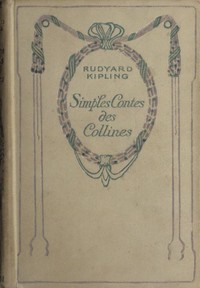
Simples Contes des Collines by Rudyard Kipling
First published in 1888, 'Simples Contes des Collines' (better known in English as 'Plain Tales from the Hills') was Rudyard Kipling's first major story collection. He wrote most of them as a young journalist in Lahore, and they crackle with the energy of someone observing a world with fresh, sharp eyes.
The Story
There isn't one single plot. Instead, think of this book as a series of snapshots from Anglo-Indian society. We meet all sorts: the young subaltern trying to impress, the cynical older officer, the ambitious civil servant's wife, and the heartbroken woman sent to the hills to recover. The stories are short, often just a few pages, but they pack a punch. One tale might be about a reckless gamble that ruins a reputation. Another might follow the tragic consequences of a misunderstood flirtation. A third could be a darkly funny look at military bureaucracy. They're all linked by their setting—the hills stations and hot plains of British India—and by Kipling's unflinching look at the flaws, passions, and hypocrisies of his characters.
Why You Should Read It
This is Kipling at his most human and least mythical. What grabs me isn't the colonial backdrop (which is, of course, problematic and part of the reading experience), but his incredible understanding of small dramas. He has a genius for the telling detail—a glance across a dinner table, a hastily written note, a piece of gossip overheard at the club. You see the loneliness, the boredom, the desperate need for connection in a foreign land. The characters aren't always likeable, but they feel painfully real. You read these stories and you think, 'Yes, people really are like that.' It's gossip with psychological depth.
Final Verdict
This book is perfect for readers who love character-driven short stories and have an interest in historical settings. It's for anyone who enjoyed the interpersonal tensions in novels like 'A Passage to India' but wants something grittier and less polished. It’s also a fascinating read for Kipling fans who only know his more famous, adventure-focused work. Be prepared for a clear-eyed, sometimes cynical, but always compelling portrait of a vanished world. Just don't expect any talking animals.
This historical work is free of copyright protections. It is available for public use and education.
Joshua Young
6 months agoClear and concise.
Noah Walker
1 year agoLoved it.







Daniel Thompson
1 year agoI didn't expect much, but the character development leaves a lasting impact. I learned so much from this.