1


The Launch Boys' Cruise in the Deerfoot — Background and Themes
(0 User reviews)
3494
Project Gutenberg
2012
Not confirmed
Boys -- Juvenile fiction; Boats and boating -- Juvenile fiction; Maine -- Juvenile fiction; Mystery fiction; Motorboats -- Juvenile fiction
Readers of public-domain and historical texts
Project Gutenberg digital edition
en
Edition facts
Words
57,831
Reading time
252 min
Text sections
6
For The Launch Boys' Cruise in the Deerfoot — Background and Themes, the stored edition analysis reports 57,831 words, 4 hr 12 min estimated reading time, and 6 detected text sections.
The text analysis averages about 18.2 words per sentence, while the detected sections provide another way to judge how the source is divided.
Project Gutenberg metadata also associates the work with “Boys -- Juvenile fiction,” connecting these edition facts with the source record’s subject description.
Source:
Project Gutenberg record #41434
In this early-20th-century boys' adventure, Alvin Landon and Chester navigate Maine's coast in the motorboat Deerfoot, encountering a mysterious man in gray who shadows them. The narrative blends suspense with detailed boating logistics, but the catalog subjects of mystery and motorboats only partially capture the psychological tension and descriptive landscape.
Read the complete public-domain text at its original source.
Read on Project GutenbergThe opening chapter of The Launch Boys' Cruise in the Deerfoot does not begin on the water but in a pine forest, where seventeen-year-old Alvin Landon admits feeling “creepy” on a moonlit night. This confession, framed by a soldier’s remark on fear, immediately establishes a psychological undercurrent that runs beneath the adventure plot. The catalog subjects list “Boys – Juvenile fiction” and “Motorboats – Juvenile fiction,” yet the excerpts devote considerable space to interior states—suspense, curiosity, and deliberate concealment—rather than to mechanical or nautical detail. The boat itself, the Deerfoot, is introduced only in chapter titles; the actual cruising is often secondary to the boys’ observations of a shadowy figure who avoids them. This editorial note examines how the text’s emphasis on watchfulness and evasion complicates the simple adventure label.
Between Two Fires: Fear and the Landscape
The first chapter’s title, “Between Two Fires,” signals a tension that is more psychological than physical. Alvin walks through a short pine wood where “the keenest eye could not penetrate” the gloom on either side. The narrator explicitly rejects the boast of fearlessness, grounding the story in a realistic admission of unease. This is not a generic boy’s bravado; the text lingers on the sensory experience of the road—moonlight, shadows, the “deep gloom”—and the way imagination “people[s] the obscurity with frightful creatures.” The catalog subject “Maine – Juvenile fiction” might suggest scenic description, but the landscape here functions as a stage for apprehension. The setting is specific (a road through a forest, an eighth of a mile long) and the fear is localized, not diffuse. Alvin’s situation—a student preparing for West Point—adds a layer of future discipline against present vulnerability. The excerpt does not reveal what, if anything, emerges from the dark, leaving the reader in the same state of alertness as the protagonist.
The Man in Gray: Surveillance and Evasion
Chapter XVII, “The Man in Gray,” centers on a single, charged moment of observation. Chester spots a figure moving on the edge of his vision; the man “dodged to one side among the trees when he saw us.” The boys immediately infer intent: “he does not wish to be seen by us.” What follows is a careful, almost procedural account of their response—they hide behind pine trunks, wait a quarter of an hour, and debate whether the man doubled back or circled around. The language is precise: “avoiding the manner of those who had detected anything amiss,” they walk on, then step into the wood. The catalog subject “Mystery fiction” is apt, but the mystery here is not a crime or a puzzle; it is the simple, unexplained behavior of a stranger. The boys do not confront him or deduce his motives; they only watch and wait. The narrative builds suspense through duration (“the minutes pass slowly”) and through the man’s continued invisibility. This passage shows that the book’s mystery is less about detection than about the experience of being watched.
Boats and Boys: The Catalog’s Omissions
The catalog subjects emphasize “Boats and boating” and “Motorboats,” yet the excerpts reveal surprisingly little about the Deerfoot itself. The boat appears in chapter titles—“A Motor Boat,” “Captain and Crew”—but the provided text focuses on land-based encounters and interior reactions. When the boys do discuss the stranger, they refer to themselves as “Captain of the Deerfoot” and speak of “the inlet,” but the boat’s mechanics, speed, or handling are absent. The catalog also lists “Historical, Psychological & Social Fiction,” a category that seems mismatched with a juvenile adventure. However, the psychological element is real: the narrative tracks the boys’ shifting suspicions, their patience, and their shared curiosity. The social dimension is limited to the two friends and the distant man; there is no broader community. Readers expecting detailed boating lore or a fast-paced chase may find the text more meditative than anticipated. The catalog’s “Mystery fiction” tag is the most accurate, but it describes a low-key, observational suspense rather than a conventional whodunit.
Readers approaching The Launch Boys’ Cruise in the Deerfoot should set aside expectations of high-seas action or technical boating instruction. The narrative rewards attention to small gestures—a glance, a pause, a decision to hide—and to the landscape’s role in amplifying unease. The catalog subjects point toward adventure and mystery, but the excerpts suggest a quieter, more introspective story about two boys learning to read the intentions of a stranger who remains just out of sight.
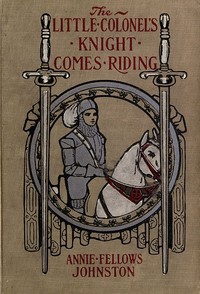
Years at this desk have taught me that boys with motorboats and girls with courtship troubles are not so far apart as spines would suggest. Both feel the weight of something unsaid, someone watching from the edges. The Little Colonel's Knight Comes Riding — Background and Themes shares that same patient ache of waiting for a answer.
There are no reviews for this eBook.
There are no comments for this eBook.
Reader reflection
What did you think of this book?
Answer a few questions and save a private reflection on this device.
Your progress
0
/
10
2
How much did you enjoy the reading experience?
3
Would you encourage someone else to read it?
4
Did the language feel accessible?
5
Did this book create an emotional response?
6
Would you start a conversation about this book?
7
Do you expect to return to this book?
8
How would you describe its reading pace?
9
In one sentence, what did you learn?
10