1

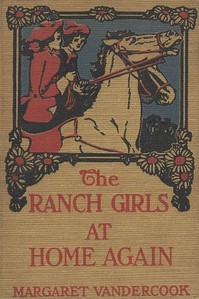
The Ranch Girls at Home Again — Themes and Context
(0 User reviews)
1039
Project Gutenberg
2011
Not confirmed
Western stories; Adventure and adventurers -- Juvenile fiction; Ranch life -- Juvenile fiction; Courtship -- Juvenile fiction; Young women -- Social life and customs -- Juvenile fiction; Wyoming -- Social life and customs -- Juvenile fiction
Readers of public-domain and historical texts
Project Gutenberg digital edition
en
Edition facts
Words
53,902
Reading time
235 min
Text sections
7
This digital edition of The Ranch Girls at Home Again — Themes and Context is described by source-level measurements including 53,902 words, 3 hr 55 min estimated reading time, and 7 detected text sections.
The text analysis averages about 20.9 words per sentence, while the detected sections provide another way to judge how the source is divided.
Project Gutenberg metadata also associates the work with “Western stories,” connecting these edition facts with the source record’s subject description.
Source:
Project Gutenberg record #34928
This editorial note examines how Margaret Vandercook uses structure, recurring images, and movement between scenes in 'The Ranch Girls at Home Again,' focusing on the opening race, the tension between domestic and wild spaces, and the handling of Olive's private confrontation with Carlos.
Read the complete public-domain text at its original source.
Read on Project GutenbergThe novel opens with a race across the prairie, a scene that immediately establishes the importance of movement and landscape. Two figures on horseback ride toward the western horizon, and the first line of dialogue—'Will Jack Ralston ever learn to be less reckless about her riding, Jim?'—introduces a central concern: the balance between freedom and restraint. This opening is not merely an action sequence; it sets up a structural pattern where physical motion often mirrors emotional or social tension.
The Race as Structural Anchor
The opening chapter, titled 'The Race,' functions as a structural anchor. The group of spectators facing the western horizon creates a framed view, as if the reader is watching a performance. The description of the prairie as 'a pale green mirror to reflect the colors of the sun' emphasizes reflection and observation, a motif that recurs throughout. The race itself is not described in detail; instead, the focus is on the watchers' reactions, particularly Ruth Colter's concern. This technique—showing events through the eyes of onlookers—reappears in later scenes, such as when Olive slips away to speak with Carlos. The structure thus privileges the social frame over the action itself.
Domestic Spaces and Their Boundaries
Vandercook repeatedly contrasts open prairie with enclosed domestic spaces. The violet beds 'not far from the Lodge' where Olive confronts Carlos are described as 'shimmering green foliage,' a cultivated patch within the wild. Olive refuses to sit on the bench, remaining standing—a small but telling detail that underscores her desire to keep distance. Later, she retreats to her own room, a private space where she undresses alone, pondering her conversation. The movement from public veranda to side door to flower bed to bedroom traces a geography of intimacy. The house itself becomes a stage where social roles are performed, while the outdoors offers both freedom and vulnerability.
Recurring Images of Light and Color
Light and color recur as symbolic markers. The opening scene is set 'an hour before sunset,' with the prairie reflecting the sun's colors. Later, the violet beds are 'shimmering green.' These details are not merely decorative; they signal shifts in mood and power. When Olive feels angry after her talk with Carlos, the narrative does not describe her emotions directly but instead notes her actions: she undresses, wonders if she was wise. The absence of color in that interior scene contrasts with the vivid outdoor descriptions. The illustrations by Ralph P. Coleman, such as the frontispiece showing a confrontation, likely reinforce this visual emphasis, though the text itself carries the pattern.
Movement Between Public and Private
The novel's structure depends on characters moving between public gatherings and private exchanges. The opening race is a public spectacle; the conversation between Olive and Carlos is a secret negotiation. Olive's whisper to Ruth, her pretense of fetching a scarf, and her exit through a side door all emphasize the choreography of concealment. The narrative follows her closely during this sequence, then cuts away. This technique of alternating shared and solitary scenes creates a rhythm of exposure and retreat. The excerpts suggest that the book will continue this pattern, using physical movement—riding, walking, stealing away—to articulate the characters' inner conflicts.
Readers attentive to Vandercook's use of setting and movement will find a story that operates as much through spatial cues as through dialogue. The prairie is not a backdrop but an active element, and the characters' journeys across it—or away from it—carry emotional weight. Pay particular attention to who is watching whom, and how the landscape frames each encounter.
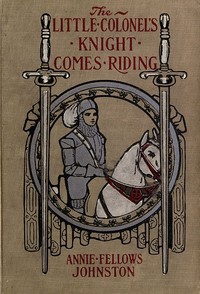
There's a moment in The Ranch Girls at Home Again when the wildness of the ranch feels almost like a held breath, a pause before the home fires reassert themselves. It made me think of the quiet ache in The Little Colonel's Knight Comes Riding — Background and Themes, where returning isn’t quite the same as arriving. Some stories simply understand that growing up is just coming home to a different room.
There are no reviews for this eBook.
There are no comments for this eBook.
Reader reflection
Record your reading impressions
A brief reflection can help important ideas stay with you longer.
Your progress
0
/
10
2
Was reading this book enjoyable?
3
How likely are you to recommend this book?
4
How much effort did this book require?
5
How valuable was this book for your own interests?
6
How personally connected did you feel to the book?
7
How would you rate its originality?
8
Would you read this book again?
9
In one sentence, what did you learn?
10