1

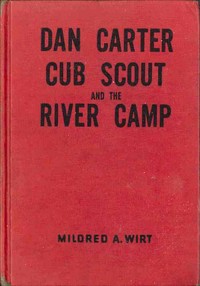
Dan Carter, Cub Scout, and the River Camp — A Closer Reading
(0 User reviews)
1997
Project Gutenberg
2012
Not confirmed
Camping -- Juvenile fiction; Mystery and detective stories; Thieves -- Juvenile fiction; Rivers -- Juvenile fiction; Cub Scouts -- Juvenile fiction
Readers of public-domain and historical texts
Project Gutenberg digital edition
en
Edition facts
Words
43,030
Reading time
188 min
Text sections
7
Before opening Dan Carter, Cub Scout, and the River Camp — A Closer Reading, the edition data offers a quick orientation: 43,030 words, 3 hr 8 min estimated reading time, and 7 detected text sections.
The text analysis averages about 11.0 words per sentence, while the detected sections provide another way to judge how the source is divided.
Project Gutenberg metadata also associates the work with “Camping -- Juvenile fiction,” connecting these edition facts with the source record’s subject description.
Source:
Project Gutenberg record #41262
In this 1949 Cub Scout mystery, Dan Carter and his den investigate a skeleton found on a river island while camping, uncovering clues about stolen furs and a coded message. The story blends outdoor adventure with detective work, set against the backdrop of a potential Scout camp purchase.
Read the complete public-domain text at its original source.
Read on Project GutenbergThe opening chapter of Mildred A. Wirt's 1949 novel places readers directly in a drifting dinghy with Dan Carter and Midge Holloway, stranded on a river as fog rolls in. The scene establishes a recurring tension between the boys' eagerness for adventure and the practical constraints of weather and adult supervision. Mr. Holloway, the Den Dad, paddles while the sail hangs limp, and the muffled roar of a motorboat from Skeleton Island hints at the mystery to come. The catalog subjects list camping, Cub Scouts, and thieves, but the excerpts show that the story's engine is less about scouting skills than about the boys' independent investigation of a skeleton and a coded message. The river setting is not merely backdrop but an active element—fog, currents, and islands shape the plot's movement.
A Skeleton and a Coded Message
The excerpts reveal that the central mystery is triggered by Chips's discovery of a skeleton on the beach, which he describes as having scared him “half out of my wits.” This discovery is not treated with graphic horror but as a puzzle to be solved by the Cub Scouts. The narrative quickly introduces a coded message, suggesting that the skeleton is linked to a larger crime. The catalog subject “Mystery and detective stories” is well supported, but the excerpts show that the detective work is done by the boys themselves, not by adults. Dan and his friends take the lead in interpreting clues, while adults like Mr. Hatfield and Mr. Holloway provide supervision but not solutions. The coded message appears early, and the boys' efforts to decode it drive the plot forward, blending scouting skills like observation and teamwork with classic mystery tropes.
Camping as a Framework for Adventure
The catalog subject “Camping -- Juvenile fiction” is accurate, but the excerpts show that camping serves primarily as a framework for the mystery rather than a detailed instructional guide. The Cubs set up camp, build balsam beds, and cook over coals, but these activities are described briefly. For instance, Mr. Holloway produces biscuits from a “home-made reflector oven,” and the boys douse sand on fires after lunch. The focus remains on the unfolding investigation: Chips wanders off despite instructions to stay close, and his discovery of the skeleton interrupts the routine. The river camp itself is a site under consideration for purchase by the Scouts, adding a stake to the setting. The natural spring and beach are noted, but the excerpts do not dwell on nature lore; instead, the island becomes a stage for the boys' independent exploration and problem-solving.
The Role of Adults and the Den Dad Dynamic
Adults in the excerpts are present but deliberately peripheral to the mystery-solving. Mr. Holloway, the Den Dad, is introduced as a supportive figure who loans his sailboat and paddles the dinghy, but he does not direct the investigation. Similarly, Mr. Hatfield, the Cub leader, advises the boys to stay together but does not forbid exploration. When Chips runs back with news of the skeleton, the adults are not shown taking charge; instead, the Cubs follow Chips to see the discovery. This dynamic aligns with the catalog subject “Cub Scouts -- Juvenile fiction,” emphasizing the organization's ethos of guided independence. The adults provide transport, meals, and safety boundaries, but the narrative voice stays close to the boys' perspective. The Den Dad's role as a facilitator rather than a hero is consistent with the series' formula, allowing young readers to identify with the protagonists' agency.
Readers approaching this book should expect a straightforward mystery where the setting—a river island with a skeleton and a coded message—matters more than detailed camping procedures. The story moves quickly from discovery to investigation, with the Cub Scouts acting as the primary detectives. Adults are present but do not overshadow the boys' initiative. The excerpts suggest that the resolution will involve decoding the message and connecting it to the stolen furs mentioned in the catalog, but the complete plot is not revealed here. This is a mid-century juvenile series entry that prioritizes action and puzzle-solving over character depth or moral lessons.
That rainy afternoon, Dan Carter’s river camp felt wonderfully close, the coded message unraveling like a quiet game. Afterwards, I found myself thinking about letters and secrets left in other places. Its gentle pull drifted me toward Helen in the Editor's Chair — Story, Setting & Ideas, where another kind of deciphering waits, softer, and equally warm.
There are no reviews for this eBook.
There are no comments for this eBook.
Reader reflection
Your personal reading reflection
Build a private reading journal entry for this title.
Your progress
0
/
10
2
How much did you enjoy the reading experience?
3
Would you encourage someone else to read it?
4
Did the language feel accessible?
5
Which aspect of the book did you value most?
6
How would you rate its originality?
7
Would you start a conversation about this book?
8
Did the story or argument move comfortably?
9
Which lesson or insight stayed with you?
10