1

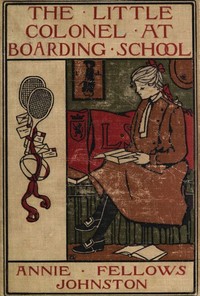
The Little Colonel at Boarding-School — Reading Companion
(0 User reviews)
1299
Project Gutenberg
2012
Not confirmed
Schools -- Juvenile fiction; Bildungsromans; Boarding schools -- Juvenile fiction; Girls -- Societies and clubs -- Juvenile fiction; First loves -- Juvenile fiction; Student adjustment -- Juvenile fiction
Readers of public-domain and historical texts
Project Gutenberg digital edition
en
Edition facts
Words
69,835
Reading time
304 min
Text sections
9
For The Little Colonel at Boarding-School — Reading Companion, the stored edition analysis reports 69,835 words, 5 hr 4 min estimated reading time, and 9 detected text sections.
The text analysis averages about 17.6 words per sentence, while the detected sections provide another way to judge how the source is divided.
Project Gutenberg metadata also associates the work with “Schools -- Juvenile fiction,” connecting these edition facts with the source record’s subject description.
Source:
Project Gutenberg record #38939
Annie F. Johnston's boarding-school story follows Lloyd Sherman and her friends as they navigate social clubs, secret readings, and the transition from childhood to young womanhood, with dialogue and description revealing their romantic ideals and peer dynamics.
Read the complete public-domain text at its original source.
Read on Project GutenbergAnnie F. Johnston's The Little Colonel at Boarding-School opens with Lloyd Sherman and her schoolmates forming a secret society called the Shadow Club, a detail that immediately establishes the novel's focus on the social hierarchies and private rituals of adolescent girls. The author's diction in the club's discussions—phrases like 'the portal to some unexplored Paradise'—reveals a voice steeped in romanticized anticipation of adulthood. Johnston's descriptive passages, such as the careful arrangement of lamps and curtains to hide a late-night reading session, emphasize the girls' meticulous efforts to create a private world within the institutional setting.
The Language of Romantic Fantasy
The girls' dialogue in the excerpts is saturated with literary and romantic references. When Katie declares she hopes a suitor will propose 'just as Guy did' in a cherry lane, she quotes a line about 'bridal white' and 'my pearl.' This moment reveals how the characters filter their expectations of love through sentimental fiction. Johnston's choice to have them compare proposals to those in Little Women and a novel called The Fortunes of Daisy Dale shows the girls measuring real life against literary models. The author does not mock this tendency but presents it as a natural phase of adolescent development, with Betty's practical remark about 'old Mr. Andrews' providing a counterpoint of realism.
Secrecy and the Construction of Space
Johnston devotes considerable descriptive attention to how the girls transform their dormitory room into a clandestine haven. The text lists specific actions: 'a heavy woollen bathrobe over her night-dress,' 'paper was stuffed in the keyholes,' 'the outside shutters were tightly closed.' This accumulation of detail—golf cape draped over the transom, three lamps burned in turn—creates a sense of ritualistic preparation. The author uses the physical environment to mirror the girls' emotional state: the rain outside and the 'soft rosy glow' inside suggest a cocoon of intimacy. The contrast between the regulated school schedule and the girls' self-made order underscores their desire for autonomy.
Voice and Social Dynamics Among the Girls
The dialogue in the excerpts reveals distinct personalities and social roles. Katie's effusive disappointment ('I won't be able to sleep a wink') contrasts with Allison's more measured regret. Betty's laugh and practical observation about Mr. Andrews show her as a grounding influence. Lloyd and Betty are positioned as privileged insiders, envied by Kitty for their proximity to the reader, Ida. Johnston uses these exchanges to map the group's internal hierarchy: Ida holds authority as the reader, while the others jockey for access. The author's choice to have the girls whisper and scheme after supper, rather than openly defy Mrs. Bond, illustrates their negotiation between obedience and rebellion.
Narrative Structure and the Unfinished Story
The excerpts center on the girls' interrupted reading of The Fortunes of Daisy Dale, a plot device that mirrors the novel's own structure. Johnston embeds a story within the story, using the fictional book to reflect the characters' own romantic yearnings. The repeated deferral of the story's conclusion—first by Mrs. Bond's games, then by bedtime—creates a pattern of anticipation that drives the Shadow Club's secret meeting. This metafictional layer allows Johnston to comment on the power of storytelling itself: Ida's reading 'adds so much' to the book, suggesting that the communal experience of narrative is as important as the text. The author leaves the embedded story unresolved within the excerpts, a technique that invites readers to consider how unfinished tales shape desire.
Readers approaching The Little Colonel at Boarding-School should attend to how Johnston uses dialogue and description to construct a world of adolescent longing and social negotiation. The author's attention to the physical details of secrecy—the stuffed keyholes, the draped transom—creates a tangible sense of the girls' private sphere. The novel rewards close reading of its characters' speech patterns, which reveal both their individuality and their shared immersion in romantic fantasy. Johnston's narrative voice remains sympathetic without sentimentality, offering a nuanced portrait of girlhood at the turn of the century.
I’ve long loved how Lloyd's secret readings taught her that stories shape our yearnings for friendship. That same quiet kinship lives in Dan Carter, Cub Scout, and the River Camp — A Closer Reading, where a boy’s simple tent-night reveries mirror her gentle awakening—both finding, in whispered pages, the soft courage to grow.
There are no reviews for this eBook.
There are no comments for this eBook.
Reader reflection
How did this book work for you?
Your answers remain private and are stored only in this browser.
Your progress
0
/
10
2
Was reading this book enjoyable?
3
How likely are you to recommend this book?
4
What was the reading difficulty like?
5
Did the story or argument move comfortably?
6
How did the reading compare with what you expected?
7
Which aspect of the book did you value most?
8
How original did the book feel?
9
What did this book teach you most?
10