1

The Motor Maids Across the Continent — Edition Insights
(0 User reviews)
678
Project Gutenberg
2011
Not confirmed
Voyages and travels -- Juvenile fiction; Automobiles -- History -- Juvenile fiction; Rocky Mountains -- Description and travel -- Juvenile fiction; Salt Lake City (Utah) -- Description and travel -- Juvenile fiction; San Francisco (Calif.) -- Description and travel -- Juvenile fiction
Readers of public-domain and historical texts
Project Gutenberg digital edition
en
Edition facts
Words
54,009
Reading time
235 min
Text sections
6
The Motor Maids Across the Continent — Edition Insights can be approached with a clearer sense of reading commitment from its source measurements: 54,009 words, 3 hr 55 min estimated reading time, and 6 detected text sections.
The text analysis averages about 15.0 words per sentence, while the detected sections provide another way to judge how the source is divided.
Project Gutenberg metadata also associates the work with “Voyages and travels -- Juvenile fiction,” connecting these edition facts with the source record’s subject description.
Source:
Project Gutenberg record #37433
An editorial note on Katherine Stokes's 1911 novel, focusing on tensions between civilized travel and wilderness adventure, the character of Hot Air Sue, and the contrast between the Motor Maids' spirited dialogue and the perilous kidnapping episode.
Read the complete public-domain text at its original source.
Read on Project GutenbergFrom the opening chapter, The Motor Maids Across the Continent establishes a central tension between the comforts of modern travel and the allure of a “wild adventure.” Miss Helen Campbell, the chaperone, protests that at her age she is becoming a “gypsy vagabond,” while the younger women tease her with reminders of their silk coats and hotel accommodations. This contrast between domestic security and the unknown road shapes the narrative, as the automobile—nicknamed the Comet—becomes both a symbol of freedom and a vulnerable target.
The Comet and the Open Road
The automobile is not merely transportation but a character in its own right, described as a “spirited horse” eager to be on the road. The journey from Chicago to San Francisco is framed as a “famous journey,” yet the text quickly undercuts any sense of leisurely touring. In the kidnapping episode, the car becomes a site of danger: Billie is drugged, hidden under a robe, and driven toward Colorado. The machine’s speed—the “swift motion” that revives her—also enables her escape when she cranks it up and flees. The road itself is ambiguous: a “first right road” that later becomes “wrong,” forcing reliance on local knowledge.
Hot Air Sue: Ally or Outsider?
Hot Air Sue, an Indian woman, occupies a complex role. She is initially part of the kidnapping plot, but she secretly aids Billie, whispering “Sue save young lady” and slashing the kidnapper’s wrist with a knife. Her speech is terse—“Umph!” and “White girl hurry”—and she is described as having “stolid admiration” for Billie’s driving. Yet she remains an outsider, her motives unclear. The text does not fully explain why she helps, nor does it grant her interiority beyond her actions. This ambiguity invites readers to consider how the story uses her as both a helper and a figure of the exotic West.
Kidnapping as a Test of Resolve
The kidnapping sequence is the most intense passage in the excerpts. Billie, drugged and exhausted, maintains a clear mind: “Although her body was exhausted, her mind was clear.” She thinks connectedly, plans her escape, and acts with cold deliberation. When she sees the kidnapper fall, she feels “deliberately and cruelly cold-blooded” and would have continued even if his back were broken. This moment contrasts sharply with the playful banter of the opening pages. The shift in tone—from lighthearted teasing to grim survival—shows how the journey tests the characters’ courage and resourcefulness.
Readers attentive to the novel’s structure will notice how the early emphasis on polite adventure gives way to genuine peril. The excerpts suggest that the Motor Maids’ journey is not merely a scenic tour but a series of trials that reveal character under pressure. Pay particular attention to how the narrative balances the girls’ camaraderie with the threats they encounter, and how figures like Hot Air Sue complicate the story’s moral landscape.
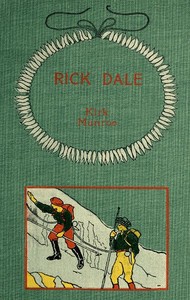
Whenever Hot Air Sue’s unladylike grit surfaces during the Motor Maids’ wilderness scrape, I find myself drifting back to an old, simpler story of a boy learning to trust the mountains alone. That same quiet tension between comfort and raw nature lingers there too, in Frank in the Mountains — Background and Themes. Somehow, both volumes smell like canvas and campfire smoke.
There are no reviews for this eBook.
There are no comments for this eBook.
Reader reflection
Record your reading impressions
A brief reflection can help important ideas stay with you longer.
Your progress
0
/
10
2
Was reading this book enjoyable?
3
Would you recommend this book to another reader?
4
How easy was the book to follow?
5
Do you expect to return to this book?
6
Did the book meet your expectations?
7
Was the book moving at the right speed?
8
How useful were the ideas in this book?
9
What changed or sharpened your thinking?
10