1

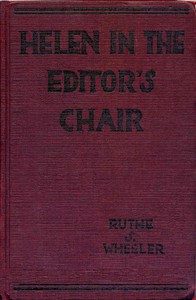
Helen in the Editor's Chair — Story, Setting & Ideas
(0 User reviews)
2358
Project Gutenberg
2013
Not confirmed
High school students -- Juvenile fiction; Family -- Juvenile fiction; Businesswomen -- Juvenile fiction; Women in journalism -- Juvenile fiction; Women in the mass media industry -- Juvenile fiction
Readers of public-domain and historical texts
Project Gutenberg digital edition
en
Edition facts
Words
50,002
Reading time
218 min
Text sections
8
The catalog record for Helen in the Editor's Chair — Story, Setting & Ideas provides practical reading context through 50,002 words, 3 hr 38 min estimated reading time, and 8 detected text sections.
The text analysis averages about 15.5 words per sentence, while the detected sections provide another way to judge how the source is divided.
Project Gutenberg metadata also associates the work with “High school students -- Juvenile fiction,” connecting these edition facts with the source record’s subject description.
Source:
Project Gutenberg record #42015
In this 1932 novel, high school student Helen Blair helps run her father's newspaper, the Rolfe Herald, taking over as editor when he leaves town. The excerpts show her juggling press day chores, a dramatic lake rescue, and an unexpected role in a school play, offering a specific look at small-town journalism and teenage enterprise.
Read the complete public-domain text at its original source.
Read on Project GutenbergThe first chapter of Helen in the Editor's Chair opens not with a plot summary but with a precise time and place: Thursday, press day at the Rolfe Herald. Helen Blair, a high school student, folds papers as they come off the clanking press, her arms aching but proud of the neat stacks. The catalog subjects list “Businesswomen” and “Women in journalism,” yet the excerpts show Helen initially in a supporting role—folding, helping, and learning—rather than in charge. The novel’s title promises the editor’s chair, but the opening pages place her at the press, not at the desk.
Press Day Details and Family Enterprise
The excerpts ground the story in the physical labor of newspaper production. Helen’s Thursday task is folding papers, and she prides herself on neat stacks. Her father is editor and publisher; her brother Tom operates the Linotype and writes part of the news. The family runs the paper together, and Helen helps every night after school and on Saturdays. This is not a story about a lone girl journalist but about a family business where each member has a defined role. The catalog subject “Family – Juvenile fiction” fits, but the excerpts show work, not sentiment. The setting is Rolfe, a midwestern village by Lake Dubar, and the paper reaches every home by supper time—a detail that gives the town a lived-in feel.
Rescue and Recovery on Lake Dubar
Chapter IX, “Rescue on Lake Dubar,” shifts from the newsroom to a lake emergency. Margaret Stevens, Helen’s friend, drifts in a boat and nearly drowns. Helen helps rescue her, and afterward Margaret recounts her experience: “I got the boat out into the lake without anyone seeing me and let it drift several hundred feet. When I tried to put the oars in the locks I stumbled, dropped them overboard and that’s the last I knew, except that for hours I was falling, falling, falling, and always there was the noise of the waves.” The language is direct, with repetition (“falling, falling, falling”) to convey disorientation. The episode is a set piece of peril and recovery, not a journalism scene. The catalog subject “High school students – Juvenile fiction” covers this, but the rescue is more adventure than school story.
Stepping into the Spotlight
In Chapter X, “Behind the Footlights,” Helen is drafted to replace a sick actress in the senior play. The dramatic instructor, Anne Weeks, sizes her up: “You’re about Sarah’s size,” she mused, “and you’re blonde and you have blue eyes. You’ll do, Helen.” Helen protests she only read the play twice “just for fun,” but she agrees. The play is a comedy-drama about finding pearls in an old image, with action, mystery, and romance. This subplot introduces theater production and teamwork, but it is separate from the newspaper work. The catalog subject “Women in the mass media industry” is not directly illustrated here; instead, Helen is a last-minute understudy. The excerpts do not show her writing or editing in this chapter, only performing.
The excerpts from Helen in the Editor’s Chair reveal a story that moves between the Herald office, a lake rescue, and a school play. The catalog subjects emphasize journalism and business, but the available text shows Helen in varied roles: press-folder, rescuer, and understudy. Readers interested in the newspaper angle may find that the novel balances it with other teenage experiences. The excerpts are incomplete, so the full arc of Helen’s editorship remains unclear, but the opening chapters establish a concrete, workaday world.
That rainy afternoon, Helen’s calm hustle at the Rolfe Herald made me long for other girls who found their footing through small adventures. I don’t remember how, but my hand drifted to The Automobile Girls at Palm Beach; Or, Proving Their Mettle Under Southern Skies — Reading Notes, and the damp light seemed warmer, like I’d stumbled on a friend’s old scrapbook.
There are no reviews for this eBook.
There are no comments for this eBook.
Reader reflection
How will you remember this book?
Save your reaction, strongest insight, and memorable passage.
Your progress
0
/
10
2
What was your overall reaction to the book?
3
Would you pass this book on to a friend?
4
What was the reading difficulty like?
5
How original did the book feel?
6
Did it raise ideas you would like to talk about?
7
Was the book moving at the right speed?
8
Do you expect to return to this book?
9
Which lesson or insight stayed with you?
10