1

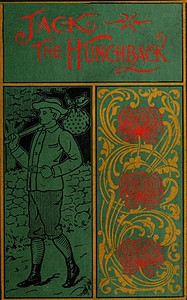
Jack the Hunchback: A Story of Adventure on the Coast of Maine — Story, Setting & Ideas
(0 User reviews)
1060
Project Gutenberg
2012
Not confirmed
Christian life -- Juvenile fiction; Animals -- Juvenile fiction; Conduct of life -- Juvenile fiction; Adventure stories; Farmers -- Juvenile fiction; Maine -- Juvenile fiction; Shipwrecks -- Juvenile fiction; Missing children -- Juvenile fiction; Aunts -- Juvenile fiction; Youth -- Conduct of life -- Juvenile fiction; Sick -- Juvenile fiction; Invalids -- Juvenile fiction; Youth with disabilities -- Juvenile fiction
Readers of public-domain and historical texts
Project Gutenberg digital edition
en
Edition facts
Words
70,079
Reading time
305 min
Text sections
7
Before opening Jack the Hunchback: A Story of Adventure on the Coast of Maine — Story, Setting & Ideas, the edition data offers a quick orientation: 70,079 words, 5 hr 5 min estimated reading time, and 7 detected text sections.
The text analysis averages about 20.1 words per sentence, while the detected sections provide another way to judge how the source is divided.
Project Gutenberg metadata also associates the work with “Christian life -- Juvenile fiction,” connecting these edition facts with the source record’s subject description.
Source:
Project Gutenberg record #41708
This editorial note examines how the opening, middle, and later excerpts of James Otis's 1892 adventure story guide a first reading, focusing on the shift from Tom Pratt's perspective to Jack's, the role of physical disability, and the handling of moral conflicts.
Read the complete public-domain text at its original source.
Read on Project GutenbergThe opening chapter of Jack the Hunchback introduces the reader to Tom Pratt, a boy who resents farm work and dreams of the sea. The narrative voice is brisk and slightly ironic, as when Tom is described as “firmly believ[ing] he was the most unfortunate boy in Maine.” The discovery of a drifting lifeboat shifts the story’s focus from Tom’s discontent to the arrival of a mysterious child—Jack, the hunchback. This transition is abrupt: Tom’s personal grievances are set aside once the boat appears, suggesting that Jack’s entrance will redefine the story’s concerns.
From Tom’s Discontent to Jack’s Arrival
The first excerpt establishes Tom Pratt as a reluctant farmer’s son, more inclined to “moonin’” than to loading seaweed. His father’s stern command and the threat of the ox-goad create a tense domestic atmosphere. Yet the moment Tom spots the boat, the narrative pivots. The boat is described as “a ship’s lifeboat about eighteen feet long,” and Tom’s speculation that “she must be adrift” introduces the central mystery. The reader is left to wonder who is in the boat and what condition they are in. This opening effectively uses Tom’s perspective to build anticipation before Jack takes center stage.
Jack’s Physical Condition and Social Position
The middle excerpt reveals Jack’s physical disability through the reactions of other characters. Mrs. Hayes refers to him as “the cripple,” and Mr. Souders apologizes for his wife’s harsh treatment of “a poor cripple like you.” Jack himself is sensitive to accusations of wrongdoing, insisting he did not intend to insult Mrs. Souders. The narrative emphasizes his vulnerability: he is dependent on Aunt Nancy’s protection and subject to the judgments of the community. The phrase “rule her spirit” applied to Aunt Nancy suggests that Jack’s presence tests the patience and charity of those around him.
Moral Conflicts and Community Dynamics
The excerpts show a community divided over Jack’s character. Mrs. Souders accuses him of mischief, but Mr. Souders and Aunt Nancy defend him. The harness-tampering incident, blamed on Bill Dean, becomes a test of Jack’s integrity. Mr. Souders tells Jack, “Mother is a leetle hot-headed,” and assures him that she will soon regret her words. The sewing circle scene highlights gossip and judgment, while Aunt Nancy’s determination to keep Jack on the farm “unless relatives come forward” underscores his uncertain status. The moral landscape is one of small-town scrutiny, where reputation is fragile.
Narrative Voice and Dialogue Patterns
James Otis uses dialect and colloquial speech to distinguish characters. Farmer Pratt says “to ’tend to his work an’ stop moonin’,” while Mr. Souders uses phrases like “I’ll venter to say” and “I’ll go bail.” Jack’s own speech is more formal, as when he says, “I don’t want you to think I tried to insult your wife.” This contrast sets Jack apart from the rural community. The narrator occasionally interjects with wry observations, such as Tom’s belief that he was “the most unfortunate boy in Maine.” These touches give the prose a lively, oral quality that suits the adventure genre.
As you read, note how the early focus on Tom Pratt gives way to Jack’s story, and how Jack’s disability is treated both as a source of sympathy and as a plot device. The excerpts suggest that the novel will balance adventure with moral lessons about community, prejudice, and resilience. Pay attention to the way minor characters—like Bill Dean and Mrs. Souders—serve as foils to Jack’s quiet dignity.
Reading how Jack’s limp shapes his path along that Maine coast, I remembered sitting by a window years ago, watching a boy in Frank at Don Carlos' Rancho — Context and Discussion navigate a world that kept misreading his intentions. Frank at Don Carlos' Rancho — Context and Discussion had that same quiet ache—characters measured by what they couldn't do, yet finding their own crooked way forward. Both books left me feeling oddly tender toward my own hesitations.
There are no reviews for this eBook.
There are no comments for this eBook.
Reader reflection
Your personal reading reflection
Build a private reading journal entry for this title.
Your progress
0
/
10
2
How much did you enjoy the reading experience?
3
Would you pass this book on to a friend?
4
How much effort did this book require?
5
How did the reading compare with what you expected?
6
How strong was your personal connection to the text?
7
Was the book moving at the right speed?
8
How useful did the reading feel?
9
Which lesson or insight stayed with you?
10