1

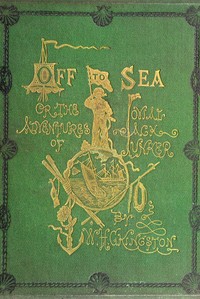
Off to Sea: The Adventures of Jovial Jack Junker on his Road to Fame — Inside the Classic
(0 User reviews)
187
Project Gutenberg
2012
Not confirmed
Sea stories; Conduct of life -- Juvenile fiction; Young men -- Conduct of life -- Juvenile fiction; Adventure stories; Pirates -- Juvenile fiction; Seafaring life -- Juvenile fiction; Sailors -- Juvenile fiction; Shipwrecks -- Juvenile fiction; Ships -- Juvenile fiction; Voyages around the world -- Juvenile fiction; Naval battles -- Juvenile fiction
Readers of public-domain and historical texts
Project Gutenberg digital edition
en
Edition facts
Words
41,068
Reading time
179 min
Text sections
13
The catalog record for Off to Sea: The Adventures of Jovial Jack Junker on his Road to Fame — Inside the Classic provides practical reading context through 41,068 words, 2 hr 59 min estimated reading time, and 13 detected text sections.
The text analysis averages about 20.6 words per sentence, while the detected sections provide another way to judge how the source is divided.
Project Gutenberg metadata also associates the work with “Sea stories,” connecting these edition facts with the source record’s subject description.
Source:
Project Gutenberg record #40689
A first-person sea adventure following Jovial Jack Junker from boyhood through naval exploits, with a buoyant narrative voice that shifts from domestic comedy to action-packed battles and typhoons.
Read the complete public-domain text at its original source.
Read on Project GutenbergThe narrator introduces himself as "Jovial Jack Junker," a name earned by his unshakeable good humour and ability to see the bright side of things. From the opening chapter, Kingston establishes a voice that is colloquial and self-deprecating, with Jack confessing he never troubled himself much about the future. The early pages dwell on domestic details—his father the marine sergeant, his mother's death, and his brother Simon's blunt remark that "father can go and get another wife, but we can’t get another mother." This homely tone soon gives way to the bustle of a ship, as Jack's first start at sea launches a narrative that alternates between lively dialogue and rapid-fire action.
A Voice That Shifts with the Tide
The narrative voice in Off to Sea is not static. In the opening chapters, Jack speaks in a relaxed, almost conversational register, full of asides and mild self-mockery. He tells us he was always inclined to sing or whistle, except in church or before elders. This easy tone mirrors his character: patient, content, and unflappable. But as the story moves to sea, the prose tightens. Descriptions of sailing and combat become more clipped and urgent. During the boarding of a Chinese junk, the sentences shorten: “I was the first on deck,” Dicky Plumb reports, and the pace accelerates. The shift is not abrupt but gradual, as if the narrator’s own excitement compresses his syntax. Readers can track this change by comparing the leisurely opening paragraphs with the terse action sequences later in the text.
Recurring Motifs: Food, Fortune, and the Future
Kingston threads several small motifs through the excerpts that reward close attention. Jack’s opening boast that “whatever I ate did me good” establishes food as a marker of his resilient constitution. Later, when the Chinese boy Joss is captured, he is described as “merry” and always ready to “sing, and dance about the deck”—a mirror of Jack’s own early disposition. The motif of waiting also recurs: Jack says he could wait for what he wanted, finding amusement in the meantime. This patience is tested during the typhoon and shipwreck, where waiting becomes a matter of survival. These recurring details—eating, singing, waiting—are not merely decorative; they anchor Jack’s character in concrete, observable behaviour.
Pace and the Handling of Time
The excerpts show a deliberate variation in narrative pace. Early chapters cover years in a few paragraphs: Jack’s birth, his mother’s death, his father’s remarriage are dispatched swiftly. But once Jack boards the Roarer, the tempo slows. Chapter headings like “Life on the Roarer” and “First Experiences of Sailing” suggest a more granular treatment of daily shipboard routine. Later, the pace quickens again during the capture of the junk and the typhoon. Kingston uses chapter breaks to signal these changes: the typhoon gets its own chapter, while the aftermath is compressed into a few paragraphs. This rhythmic alternation between summary and scene gives the narrative a propulsive, episodic quality typical of adventure serials, but executed with a clear sense of when to linger and when to press forward.
Because the excerpts cover only the first eight chapters and a later fragment, the full arc of Jack’s “road to fame” remains unknown. Readers should note how the early domestic scenes establish a baseline of voice and character against which later adventures can be measured. Pay attention to how Kingston handles transitions between action and reflection, and whether the jovial tone persists through the promised naval battles and pirate encounters. The text rewards attention to small verbal habits—Jack’s tendency to understate danger, his fondness for reported speech, and the way other characters’ voices (like Sergeant Turbot’s) are differentiated from his own.
There’s something about Junk’s constant turning toward the next horizon that reminds me of afternoons spent with brave Lloyd Sherman and her friends, learning that home is a feeling you carry, not a place you leave behind. Funny how those old stories settle in like that—quietly, the way dust settles on a windowsill. I keep The Little Colonel's Holidays — Edition Insights near the one from my childhood, just to remember.
There are no reviews for this eBook.
There are no comments for this eBook.
Reader reflection
Your personal reading reflection
Build a private reading journal entry for this title.
Your progress
0
/
10
2
Was reading this book enjoyable?
3
Would you pass this book on to a friend?
4
How much effort did this book require?
5
How closely did the book connect with your experience?
6
What did you appreciate most?
7
How understandable was the text?
8
How useful did the reading feel?
9
What did this book teach you most?
10