1

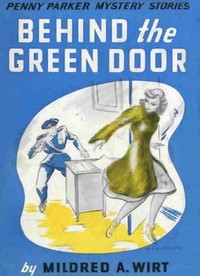
Behind the Green Door — Inside the Classic
(0 User reviews)
139
Project Gutenberg
2010
Not confirmed
Adventure and adventurers -- Juvenile fiction; Mystery and detective stories; Parker, Penny (Fictitious character) -- Juvenile fiction; Women detectives -- Juvenile fiction; Women in journalism -- Juvenile fiction; Gangsters -- Juvenile fiction
Readers of public-domain and historical texts
Project Gutenberg digital edition
en
Edition facts
Words
47,146
Reading time
205 min
Text sections
7
For Behind the Green Door — Inside the Classic, the stored edition analysis reports 47,146 words, 3 hr 25 min estimated reading time, and 7 detected text sections.
The text analysis averages about 11.6 words per sentence, while the detected sections provide another way to judge how the source is divided.
Project Gutenberg metadata also associates the work with “Adventure and adventurers -- Juvenile fiction,” connecting these edition facts with the source record’s subject description.
Source:
Project Gutenberg record #34592
Mildred A. Wirt's 1940 Penny Parker mystery uses brisk dialogue and physical comedy to frame a reporter's ski-resort investigation. The author's diction—from 'christiana turn' to 'moseying around'—blends sport, journalism, and rivalry, while the green door itself becomes a charged symbol of secrecy.
Read the complete public-domain text at its original source.
Read on Project GutenbergMildred A. Wirt opens Behind the Green Door with a burst of physical comedy: Penny Parker, clad in a new snowsuit, skids across a polished living-room floor on a rug, announcing an 'open christiana turn with no brakes dragging.' The housekeeper's dry retort—'Coming down the mountain, my eye!'—establishes a playful, sparring tone that carries into the novel's investigative scenes. Wirt's diction blends sport-specific jargon ('telemark') with breezy reporter slang ('moseying around'), and she uses the green door not merely as a plot device but as a charged object that characters circle, guard, and covet. The excerpts reveal a writer attentive to gesture and posture: Penny 'twisted her agile young body sideways,' later 'flashed a gay smile' while holding up her admittance card. These small physical details anchor the mystery in a world of visible, felt actions.
Diction as Characterization
Wirt differentiates her characters through word choice and sentence rhythm. Penny's speech is quick, colloquial, and self-aware: 'This one is a honey!' she crows, then later deflects with 'Oh, just moseying around.' The rival reporter Francine Sellberg, by contrast, uses clipped, guarded phrases: 'I've not only been looking for something, I've found it!' The housekeeper Mrs. Weems speaks in exasperated, maternal cadences—'I declare, you've acted like a crazy person'—while the guard at the green door says nothing at all, his silence a form of authority. Wirt also embeds period-specific slang ('scoop,' 'admittance card') that roots the dialogue in 1940s newspaper culture. Even Penny's internal thoughts are rendered in a conversational register: 'It was boastful of me to show her my ticket,' she reflects, using the word 'boastful' rather than a more formal term. This consistency in voice makes the characters recognizable within a few lines of speech.
The Body as a Narrative Tool
Wirt frequently uses physical action to advance plot or reveal character. The opening rug-skidding scene is not mere whimsy; it establishes Penny as restless, theatrical, and physically adept—traits that later serve her as she navigates hotel corridors and confronts Francine. When Penny 'twisted her agile young body sideways' or 'darted across the room to preen,' Wirt gives the reader a kinesthetic sense of her energy. Later, the standoff with Francine is choreographed through movement: Penny 'paused and turned to face her companion squarely,' then 'walked on down the corridor' after showing her card. The green door itself is described in terms of its material presence—'unmarked,' guarded by a seated man—and Penny's approach is a series of deliberate steps: listening, pushing open a door, pausing. These physical details create a texture of suspense that dialogue alone would not achieve.
Rivalry and Information Control
The excerpts show Wirt constructing a mystery around the withholding and exchange of information. Penny and Francine circle each other, each trying to extract clues without revealing their own. Francine's line 'I've not only been looking for something, I've found it!' is a classic bluff; Penny counters by flashing her admittance card, a tangible piece of leverage. Wirt uses the hotel's physical layout—the second floor, the unmarked door, the narrow hall—to mirror this cat-and-mouse game. The green door becomes a symbol of the story's central tension: who gets to pass through it, and what lies beyond? Penny's offer to 'pool our interests' is refused, and the negotiation is conducted in short, staccato exchanges that feel like a verbal fencing match. The author does not reveal what is behind the door in these excerpts, but the reader understands that access is a form of power.
Setting as a Character
Wirt builds the world of Behind the Green Door through specific, sensory details of place. The opening scene takes place in a living room with a 'polished floor' and a 'full length mirror,' a domestic space that Penny repurposes as a ski slope. The hotel is described in terms of its vertical geography: elevators, stairways, corridors, and a 'wing' with an unmarked door. The guard sits 'at his usual post before the Green Door,' suggesting a routine that Penny must disrupt. Even the mountain resort, Pine Top, is invoked through Penny's anticipation of skiing—'I have to break in my new suit and limber up my muscles somehow.' These settings are not backdrops but active elements: the polished floor enables comedy, the hotel corridor enables surveillance, and the green door itself is the story's magnetic center. Wirt's descriptions are economical but vivid, giving the reader just enough to visualize each space.
Readers attentive to Wirt's craft will notice how she uses the physical world—a rug, a card, a door—to externalize internal conflicts. The green door is never merely a door; it is a test of nerve, a prize, and a boundary. Pay attention to what characters do with their hands and feet, and to the spaces they move through. The mystery may be the engine, but the author's choices in diction and gesture are what give the story its particular texture.
Rereading Mildred Wirt’s green door, I kept thinking how a hidden passage can feel less like mystery than memory—a quiet hinge. It reminded me, oddly, of Dorothy Dale in the City — Themes and Context, where the city itself becomes that same whispered threshold, separating who we were from who we’re becoming. Just a thought that lingered.
There are no reviews for this eBook.
There are no comments for this eBook.
Reader reflection
What was your reading experience?
Capture what you thought, learned, and would like to remember.
Your progress
0
/
10
2
How much did you enjoy the reading experience?
3
Is this a title you would suggest to others?
4
How much effort did this book require?
5
How much did the book move you?
6
Did the book deliver what you hoped for?
7
Did it raise ideas you would like to talk about?
8
Is this a title worth rereading?
9
What changed or sharpened your thinking?
10