1

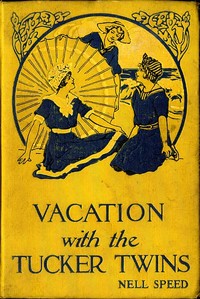
Vacation with the Tucker Twins — Reading Companion
(0 User reviews)
210
Project Gutenberg
2011
Not confirmed
Twins -- Juvenile fiction; Friendship -- Juvenile fiction; Vacations -- Juvenile fiction; Weddings -- Juvenile fiction; Seashore -- Juvenile fiction; Families -- Juvenile fiction
Readers of public-domain and historical texts
Project Gutenberg digital edition
en
Edition facts
Words
62,852
Reading time
274 min
Text sections
8
The catalog record for Vacation with the Tucker Twins — Reading Companion provides practical reading context through 62,852 words, 4 hr 34 min estimated reading time, and 8 detected text sections.
The text analysis averages about 19.4 words per sentence, while the detected sections provide another way to judge how the source is divided.
Project Gutenberg metadata also associates the work with “Twins -- Juvenile fiction,” connecting these edition facts with the source record’s subject description.
Source:
Project Gutenberg record #36046
Nell Speed's 1916 novel follows the Tucker twins and their friend as they open a beach cottage, host a house-party, and navigate young adulthood. The opening reveals the narrator's initial disappointment with Willoughby Beach, contrasting with the twins' enthusiasm. Later excerpts show a mix of social events, songs, and reflections on growing up.
Read the complete public-domain text at its original source.
Read on Project GutenbergThe narrator's first impression of Willoughby Beach is one of keen disappointment: "It was so sandy, so flat, and so absolutely shadeless." This frank admission sets a personal, reflective tone, immediately distinguishing her perspective from the Tucker twins' unbridled enthusiasm. The twins, Dum and Dee, can hardly wait to race to the water, and their father, Mr. Jeffry Tucker, has promised a beach house-party as a reward for passing exams. The opening chapter establishes the tension between the narrator's inner feelings and her need to conceal them from her hostesses, hinting at the social dynamics that will unfold.
First Impressions and the Beach Setting
The novel opens with a vivid description of Willoughby Beach, emphasizing its flat, sandy, and shadeless landscape. The narrator longs for "the green hills far away" and struggles to hide her disappointment from the enthusiastic Tuckers. This contrast between the narrator's internal reaction and her outward composure introduces a key theme: the performance of social roles. The twins, Dum and Dee, are eager to wade in the ocean, but Dum laments growing up, saying, "How I hate to grow up!" This moment foreshadows the novel's concern with the transition from childhood to young adulthood. The beach setting is not just a backdrop but a catalyst for the characters' interactions and self-discoveries.
Songs and Stories on the Piazza
In a later excerpt, the characters gather on the piazza, where Judge Grayson sings a Scots ballad, "My love she's but a lassie yet." The song's lyrics about a "lightsome, lovely lassie" and a "braw time coming yet" resonate with the group's mood. The narrator notes that Zebedee, the twins' father, looks "shiny-eyed," likely thinking of his daughters' rapid development. The scene includes Miss Cox sewing wedding clothes, with the girls helping—though the narrator admits she "could not even sew carpet rags together well enough to pass muster." This moment of domesticity contrasts with the earlier beach frolics, showing the range of activities in the novel. The Judge also tells stories about horses, insisting that no horse is naturally vicious, a theory that appeals to Dee, who "thought much worse of humanity than animality."
Growing Up and Social Expectations
The excerpts reveal a recurring tension between the desire to remain childlike and the pressure to act grown-up. After a hop (dance), the narrator is glad "just to be little girls again and not have to play 'lady come to see.'" The twins' father, Zebedee, worries about their rapid development, preferring to see them as "romping hoydens" rather than "sedate young ladies." This anxiety is underscored by the narrator's observation that the twins looked "boyish" as they crowded into a hammock. The novel uses these small moments to explore the expectations placed on young girls in the early twentieth century, without heavy-handed moralizing. The characters' interactions with adults like Judge Grayson and Miss Cox provide a counterpoint to the youthful energy of the twins and their friends.
Narrative Voice and Humor
The narrator's voice is a distinctive feature of the novel. She is self-deprecating about her sewing skills and candid about her initial disappointment with the beach. Her observations are often wry, as when she notes that the twins' father "had tipped Blanche with the shiny fifty-cent piece" to put his mind at ease. The humor arises from the gap between the narrator's internal thoughts and her outward behavior. She describes her need for "great self-control and some histrionic ability" to conceal her emotions. This narrative style creates an intimate, confiding tone that invites the reader to share in her perspective. The excerpts suggest that the novel balances lighthearted adventure with genuine emotional insight, making the narrator a relatable guide through the summer's events.
As you read, pay attention to how the narrator's voice shapes the story. Her frankness about her own feelings—whether disappointment, relief, or amusement—provides a counterpoint to the twins' exuberance. The beach setting and the house-party framework offer ample opportunity for both comedy and reflection. The novel's episodic structure, with chapters titled like "The Beach" and "Bubbles," suggests a series of vignettes rather than a tightly plotted narrative. Let the narrator's observations guide your reading, and notice how the characters' interactions reveal their personalities and concerns.
Reading about the Tucker twins’ beach cottage, I kept thinking how their worries felt so distant and sunlit. That same unhurried feeling came back to me later with Baseball Joe of the Silver Stars; or, The Rivals of Riverside — Reading Companion, where even a rivalry seems gentle, just boys finding their footing on green fields. Both remind me of summers when everything mattered neither too much nor too little.
There are no reviews for this eBook.
There are no comments for this eBook.
Reader reflection
What did you think of this book?
Answer a few questions and save a private reflection on this device.
Your progress
0
/
10
2
How did the book work for you overall?
3
How likely are you to recommend this book?
4
What was the reading difficulty like?
5
Did the book deliver what you hoped for?
6
How distinctive were its ideas or approach?
7
How did the pace of the book feel?
8
Did the book give you something worth debating?
9
Which lesson or insight stayed with you?
10