1

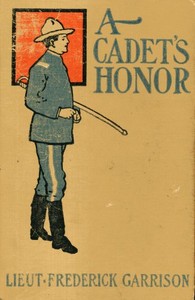
A Cadet's Honor: Mark Mallory's Heroism — Context and Discussion
(0 User reviews)
143
Project Gutenberg
2011
Not confirmed
Conduct of life -- Juvenile fiction; Swimming -- Juvenile fiction; Friendship -- Juvenile fiction; Revenge -- Juvenile fiction; Adventure and adventurers -- Juvenile fiction; Students -- Juvenile fiction; Youth -- Conduct of life -- Juvenile fiction; Soldiers -- Juvenile fiction; Courage -- Juvenile fiction; Hazing -- Juvenile fiction; Parent and child -- Juvenile fiction; Honor -- Juvenile fiction; United States Military Academy -- Juvenile fiction; Fighting (Psychology) -- Juvenile fiction
Readers of public-domain and historical texts
Project Gutenberg digital edition
en
Edition facts
Words
54,623
Reading time
238 min
Text sections
7
Before opening A Cadet's Honor: Mark Mallory's Heroism — Context and Discussion, the edition data offers a quick orientation: 54,623 words, 3 hr 58 min estimated reading time, and 7 detected text sections.
The text analysis averages about 15.0 words per sentence, while the detected sections provide another way to judge how the source is divided.
Project Gutenberg metadata also associates the work with “Conduct of life -- Juvenile fiction,” connecting these edition facts with the source record’s subject description.
Source:
Project Gutenberg record #36099
Upton Sinclair's early novel, published under a pseudonym, follows West Point cadet Mark Mallory as he navigates hazing, honor codes, and physical confrontations. The text reveals tensions between individual conscience and institutional loyalty, with vivid fight scenes and a narrator who self-consciously comments on the gap between heroic ideals and messy reality.
Read the complete public-domain text at its original source.
Read on Project GutenbergThe narrator of A Cadet's Honor repeatedly interrupts the action to remark on the difference between how events should happen and how they actually do. After describing a two-against-eight fight, the narrator admits, 'The writer wishes it were his privilege to chronicle the fact that the two put the eight to flight... but on the other hand truth is a stubborn thing.' This editorial voice—part chronicler, part ironist—gives the novel a peculiar texture: it is a juvenile adventure that keeps reminding readers that stories are constructed, that heroes tire, and that victory often arrives only with reinforcements.
The Yearling Class as Guardians of Honor
The opening chapter establishes the yearling class as 'by inherent right the guardians of West Point's honor, and the hazers of the plebe.' The narrator treats this as a fixed social fact, not a matter for debate. The meeting at Trophy Point is called because traditions have been 'trampled beneath the dust' by plebes. The language is inflated—'outrageously insulted,' 'mightiest traditions'—but the narrator never questions the premise. Instead, the reader is dropped into a world where institutional hierarchy is natural law, and the yearlings' outrage is presented as self-evidently justified. The meeting's procedural details—motions, elections, a 'chair' made from a cannon—suggest a parody of democratic governance, yet the narrator does not underline the irony. The tension between the solemnity of the occasion and the absurdity of teenagers meeting on a cannon to discuss 'honor' is left for the reader to detect.
Fighting, Language, and the Narrator's Interjections
The fight scenes are choreographed with a mix of slapstick and genuine violence. Characters are identified by nicknames—'Indian,' 'the Parson,' 'the dude,' 'the farmer'—that reduce them to types, yet the narrator occasionally pauses to note a specific detail: the dude's 'collar, much to his alarm, having wilted.' The Parson's comic erudition appears in his 'sesquipedalian Hellenic vocable—ahem!—Megalacephalomania,' a joke that depends on the reader recognizing the absurdity of using a Greek-derived word for 'swelled head' in the middle of a brawl. Dewey's rambling non sequitur about a sausage factory and homeless cats further undercuts the tension. These interruptions are the novel's most distinctive feature: the narrator seems aware that the conventions of the juvenile adventure story are creaky, and he winks at the reader without breaking the frame entirely.
The Unreliable Heroics of Mark Mallory
Mark Mallory is introduced as a capable fighter—'Mark's prowess was dreaded'—but the excerpts show him arriving late to the main battle, after the farmer and the dude have already been worn down. The narrator does not dwell on this; Mark simply 'placed himself by the side of the panting dude' and joins the fray. The novel's title promises 'heroism,' but the evidence suggests a more complicated picture: heroism here is collective, belated, and dependent on luck. The narrator's aside about truth being 'a stubborn thing' applies as much to Mark's role as to the fight's outcome. Readers attentive to these details may find the book less a straightforward celebration of courage and more a study of how reputations are constructed—by the characters, by the narrator, and by the genre itself.
Readers coming to A Cadet's Honor expecting a simple tale of pluck and virtue will find instead a narrator who keeps pulling back the curtain. The book rewards attention to its asides, its comic digressions, and the gap between what characters say about honor and what they actually do. Pay particular attention to the moments when the narrator admits that things did not go as planned—those are where the novel's real interest lies.
I’ve often shelved A Cadet’s Honor beside a certain quiet story, finding in both a lonely struggle for decency against rigid walls. Mark Mallory’s bruised conscience echoes in that little princess’s resolve, each grasping at honor when the institution offers only rules. There’s a tender, stubborn kinship there, like two candles in separate windows. The Little Princess of Tower Hill — Background and Themes holds that same gentle light.
There are no reviews for this eBook.
There are no comments for this eBook.
Reader reflection
How did this book work for you?
Your answers remain private and are stored only in this browser.
Your progress
0
/
10
2
Was reading this book enjoyable?
3
Would you pass this book on to a friend?
4
How demanding did the text feel?
5
Would you start a conversation about this book?
6
How much did the book move you?
7
How would you rate its originality?
8
How would you describe its reading pace?
9
In one sentence, what did you learn?
10