1


Little Nettie; or, Home Sunshine — Reading Notes
(0 User reviews)
2811
Project Gutenberg
2011
Not confirmed
Christian life -- Juvenile fiction; Children -- Death -- Juvenile fiction; Siblings -- Juvenile fiction; Poverty -- Juvenile fiction; Temperance -- Juvenile fiction; Children's accidents -- Juvenile fiction
Readers of public-domain and historical texts
Project Gutenberg digital edition
en
Edition facts
Words
26,908
Reading time
117 min
Text sections
3
The catalog record for Little Nettie; or, Home Sunshine — Reading Notes provides practical reading context through 26,908 words, 1 hr 57 min estimated reading time, and 3 detected text sections.
The text analysis averages about 14.9 words per sentence, while the detected sections provide another way to judge how the source is divided.
Project Gutenberg metadata also associates the work with “Christian life -- Juvenile fiction,” connecting these edition facts with the source record’s subject description.
Source:
Project Gutenberg record #35983
This editorial note traces how the opening spring scene, the garret star-gazing, and the rice-broth episode in Little Nettie shape a first reading, highlighting the interplay of physical hardship and spiritual comfort.
Read the complete public-domain text at its original source.
Read on Project GutenbergThe book begins not with Nettie herself but with a spring: clear water running over pebbles, a worn footpath, and the murmur of the stream. Only after this sensory description do a woman and a girl appear, carrying pails. The opening establishes a pattern of juxtaposing natural beauty with human weariness—the woman’s “jaded look” against the spring’s song. Nettie’s first words are a hymn about rest, immediately countered by her mother’s bitterness. This tension between earthly exhaustion and heavenly hope recurs throughout the excerpts.
The Weight of a Tin Pail
The tin pail is a small but telling detail. It is “light before it was filled,” yet after drawing water it bends Nettie’s figure “like a willow branch.” The physical weight mirrors the family’s economic burden. Later, the same pail carries rice broth—a meal that “don’t cost anything,” as Nettie notes. The pail thus becomes a symbol of both labor and provision. The mother’s relief at the broth (“the best thing I ever saw”) underscores how scarce resources are managed. The pail’s recurrence ties the opening chore to later survival strategies.
Garret, Stars, and the Golden City
Chapter V moves to Nettie’s attic room in December. The cold is described concretely: snow drifts through cracks, the shutter is left open to see stars. Nettie’s comfort comes not from warmth but from scripture and hymns. She repeats verses about the Golden City, where “God shall wipe all tears from their eyes.” The stars become companions, whispering promises. This scene contrasts sharply with the earlier domestic strife. The garret, though physically harsh, is a space of spiritual intimacy. Readers see Nettie’s inner life—her hope is not naive but hard-won against cold and hunger.
The Father’s Humour and the Grocer’s Bill
Mr. Mathieson appears only briefly, but his presence shapes the household. He comes home “in a terrible humour,” and Nettie and her mother endure “a sad evening.” The narrative links his temper to drink and unpaid bills: he spends earnings on drink rather than clearing the grocer’s account. The family is forced to live on cash, leading to constant scarcity. Nettie grows “more delicate, more thin, and more feeble every day,” yet her father does not notice. The excerpts do not reveal his fate, but the pattern of denial and fear is clear. The mother’s earlier wish for rest takes on added weight.
Hymns as Dialogue and Solace
Throughout the excerpts, hymns and scripture function as a second language. Nettie sings “There is rest for the weary” in response to her mother’s despair; later, she repeats verses to herself in the garret. The mother’s comment—“I believe you eat the Bible and sleep on the Bible”—acknowledges this habit without fully sharing it. The hymns are not decorative; they are Nettie’s way of reasoning with hardship. The text does not explain whether this faith is rewarded in the plot, but it is clearly the source of the “home sunshine” promised in the title.
A Quiet, Sober Look
Nettie’s face is described early as having “a quiet, very sober look,” broken only by a “pleasant smile.” This description is not repeated, but it colors every subsequent scene. Her cheerfulness is not bubbly but steady, rooted in belief. The narrative does not sentimentalize her; it shows her panting, shivering, and hungry. The sobriety suggests awareness of hardship, while the smile points to her trust. Readers may watch for how this demeanor holds up as the story progresses.
These excerpts offer a focused entry into the book’s emotional and material world. Pay attention to how objects—the pail, the broth, the garret shutter—carry meaning across chapters. The hymns and scripture are not interruptions but part of the dialogue. The story does not resolve the father’s drinking or the family’s poverty within these pages, but it establishes a rhythm of trial and consolation that rewards careful reading.
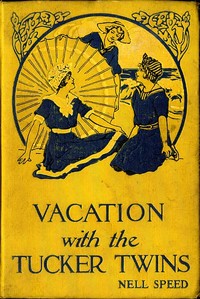
That garret window, catching stars through cold glass, reminded me of my own childhood attic—cracked floorboards, a patched quilt, the ache of waiting for warmth. Little Nettie holds hardship and comfort together so gently. It made me recall the unhurried summer afternoons spent wandering with the Tucker twins, where ordinary kindness felt just as bright. Vacation with the Tucker Twins — Reading Companion holds that same quiet glow.
There are no reviews for this eBook.
There are no comments for this eBook.
Reader reflection
Your personal reading reflection
Build a private reading journal entry for this title.
Your progress
0
/
10
2
What was your overall reaction to the book?
3
Would you pass this book on to a friend?
4
What was the reading difficulty like?
5
Did anything about the book feel genuinely new?
6
Would a second reading be valuable?
7
How valuable was this book for your own interests?
8
How much did the book move you?
9
Which lesson or insight stayed with you?
10