1

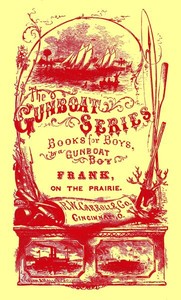
Frank on the Prairie — Story, Setting & Ideas
(0 User reviews)
1694
Project Gutenberg
2013
Not confirmed
Conduct of life -- Juvenile fiction; Adventure stories; Indians of North America -- Juvenile fiction; Survival skills -- Juvenile fiction; Cousins -- Juvenile fiction; Youth -- Conduct of life -- Juvenile fiction; Hunters -- Juvenile fiction; Trappers -- Juvenile fiction
Readers of public-domain and historical texts
Project Gutenberg digital edition
en
Edition facts
Words
55,388
Reading time
241 min
Text sections
6
For Frank on the Prairie — Story, Setting & Ideas, the stored edition analysis reports 55,388 words, 4 hr 1 min estimated reading time, and 6 detected text sections.
The text analysis averages about 22.1 words per sentence, while the detected sections provide another way to judge how the source is divided.
Project Gutenberg metadata also associates the work with “Conduct of life -- Juvenile fiction,” connecting these edition facts with the source record’s subject description.
Source:
Project Gutenberg record #42101
This editorial note examines how the opening, middle, and later excerpts of Harry Castlemon's 1869 adventure novel guide a first reading, focusing on the shift from domestic preparation to prairie danger, the role of the trapper's advice, and the escalating peril in the buffalo hunt scene.
Read the complete public-domain text at its original source.
Read on Project GutenbergThe opening chapter of Frank on the Prairie establishes a pattern of anticipation and preparation that shapes the entire narrative. Frank and Archie, fresh from a hunting expedition in “the woods,” are consumed by tales of their adventures until the arrival of Uncle James from California redirects their ambitions toward the West. The uncle’s “inexhaustible fund of stories” about crossing the plains and fighting Indians serves as both catalyst and foreshadowing, priming the reader for the dangers ahead. Notably, the boys’ previous exploits—particularly Frank’s fight with a moose—have earned him a local reputation, but the text quickly moves beyond past glories. The chapter title, “Ho for the West!,” signals a decisive turn, and the narrative wastes little time in transporting the characters from domestic village life to the open prairie. This brisk transition is characteristic of Castlemon’s style: action-oriented, with minimal introspection, and driven by a series of escalating challenges.
From Village to Prairie: The Opening’s Narrative Engine
The first chapter efficiently establishes the story’s premise through a familiar adventure-fiction device: the arrival of a seasoned traveler who ignites the protagonists’ wanderlust. Uncle James’s ten-year absence and his experiences in the mines and on the plains provide a credible bridge between the boys’ previous woodland hunts and the more formidable prairie setting. The text emphasizes that Frank and Archie are not novices—they have a museum of specimens and a reputation—but the uncle’s stories introduce a new scale of danger. The phrase “Ho for the West!” is both exclamation and command, compressing the transition from talk to action. Castlemon does not dwell on the journey’s logistics; instead, the narrative leaps forward, trusting that the reader will follow the momentum. This opening strategy primes the reader to expect rapid movement between episodes, with each new chapter promising fresh encounters.
The Trapper’s Voice: Embedded Warnings and Reader Expectations
Midway through the excerpts, a trapper emerges as a key figure whose advice carries weight. In the buffalo hunt scene, Frank recalls that “the trapper had so emphatically cautioned him to avoid” the very predicament he now faces—being surrounded by a herd. This moment of recollection is structurally important: it transforms the trapper from a background character into a source of foreshadowing. The reader, having heard the trapper’s warnings earlier (in chapters not fully excerpted), recognizes the dramatic irony. Frank’s failure to heed the advice is not presented as a moral failing but as a natural consequence of excitement and inexperience. The text uses the trapper’s voice to create a framework of expectations: the prairie is a place where rules must be learned through trial. This pattern—advice given, advice ignored, consequences faced—recurs throughout the novel, giving the narrative a didactic rhythm without becoming overtly moralizing.
The Buffalo Hunt: A Set Piece of Controlled Chaos
The extended buffalo hunt excerpt is the most vivid in the provided text, showcasing Castlemon’s ability to render action with precise, sensory detail. The description of the herd’s hoofbeats “sounding on the hard prairie like the rolling of thunder” establishes an auditory landscape of danger. Frank’s initial success—felling buffalo with rifle and revolver—gives way to a loss of control when his horse Pete runs away. The narrative shifts from active hunting to passive peril: Frank becomes “as helpless as if he had been at sea, in an open boat, without rudder, sails, or oars.” This simile is telling, as it connects the prairie to the maritime adventures of the series’ title. The scene is structured as a crescendo of narrowing options: the clear space around Frank shrinks, his companions become distant observers, and the memory of the trapper’s story about a man trampled to death intensifies the stakes. Castlemon balances external action with Frank’s internal response—a momentary weakness followed by renewed resolve—creating a template for the protagonist’s character arc.
Later Excerpts: The Shift to Survival and Reflection
While the later excerpts in the record are dominated by Project Gutenberg’s legal and donation information, the chapter titles from the contents page hint at a narrative trajectory beyond the buffalo hunt. Chapters such as “Lost on the Prairie,” “A Night Among the Wolves,” and “The Outlaw’s Escape” suggest that the novel moves from group adventures to more isolated survival scenarios. The presence of a trapper’s “Reminiscence” (Chapter VII) indicates that the narrative may pause for embedded stories, a common technique in adventure fiction to deepen setting and character. The chapter “How the Trapper got his Horse” implies a backstory that humanizes the experienced guide. For a first-time reader, these titles promise a shift from the communal excitement of the wagon train and buffalo hunt to more personal trials. The later portions likely test Frank’s resourcefulness when separated from his companions, echoing the isolation he experiences during the runaway horse episode.
Reading Frank on the Prairie with attention to its opening, middle, and later excerpts reveals a narrative that balances momentum with embedded lessons. The early chapters establish a pattern of eager departure and rapid action; the middle scenes, particularly the buffalo hunt, dramatize the consequences of ignoring experienced voices; and the later chapters, as suggested by the contents, likely turn toward solitary endurance. Castlemon’s prose is efficient, favoring concrete action over psychological depth, but the recurring motif of advice versus experience gives the story a coherent structure. First-time readers may find it useful to note how each episode builds on the last, with the trapper’s warnings serving as a thread that ties the adventures together.
The old advice about caution before the hunt reminds me of my father’s quiet warnings before a long trip, and I felt that same patient dread in this excerpt. It’s a gentle echo of how Frank Merriwell's Alarm; Or, Doing His Best — Inside the Classic once made me pause on its cover, wondering what waiting felt like inside those pages.
There are no reviews for this eBook.
There are no comments for this eBook.
Reader reflection
What did you think of this book?
Answer a few questions and save a private reflection on this device.
Your progress
0
/
10
2
Did this book hold your interest?
3
Would you pass this book on to a friend?
4
How demanding did the text feel?
5
Would you like to discuss this book with someone?
6
What was its emotional impact?
7
How clear did the writing feel?
8
How original did the book feel?
9
Which lesson or insight stayed with you?
10