1

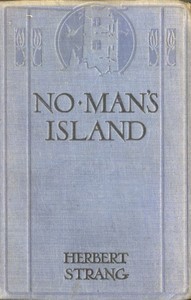
No Man's Island — Reading Notes
(0 User reviews)
3029
Project Gutenberg
2012
Not confirmed
Adventure stories; Friendship -- Juvenile fiction; Camping -- Juvenile fiction; England -- Juvenile fiction; Motorboats -- Juvenile fiction
Readers of public-domain and historical texts
Project Gutenberg digital edition
en
Edition facts
Words
63,102
Reading time
275 min
Text sections
10
The source record for No Man's Island — Reading Notes measures this digital text at 63,102 words, 4 hr 35 min estimated reading time, and 10 detected text sections.
The text analysis averages about 13.3 words per sentence, while the detected sections provide another way to judge how the source is divided.
Project Gutenberg metadata also associates the work with “Adventure stories,” connecting these edition facts with the source record’s subject description.
Source:
Project Gutenberg record #40555
Herbert Strang's 1921 adventure follows three boys camping on a river island in Wessex, where a mysterious fire, a moaning sound, and hidden adversaries escalate a camping trip into a tense game of cat and mouse. The narrative shifts from leisurely boating to rapid-fire action, with dialogue that mixes dry wit and grim resolve.
Read the complete public-domain text at its original source.
Read on Project GutenbergThe motor-boat thrashes up a narrow river, its dinghy tossed like a cork—Herbert Strang opens No Man's Island with a scene of controlled urgency. The prose is brisk, laden with sensory detail: the swollen stream, the dense entanglement of shrubs, the spray buffeting the bows. Three boys—Phil Warrender, Armstrong, and Pratt—are introduced not through description but through their actions amid the craft. The voice is matter-of-fact, yet the setting hints at isolation and impending trouble.
Strang's narrative voice shifts as the story progresses. Early chapters dwell on the rhythms of camping and motor-boat handling, but the pace quickens sharply after a devastating fire. The boys' dialogue becomes clipped, their observations more tactical. The author uses Pratt's sardonic humor—'Saved our bacon, you see'—to leaven tension, while Warrender's anger hardens into a vow: 'some one shall pay pretty dearly.' This tonal swing from pastoral adventure to near-thriller is the book's defining structural move.
From Leisurely Cruise to Tense Vigil
The first chapter establishes a world of competent leisure. The boys navigate a winding river, their motor-boat a symbol of self-reliance. Strang's prose lingers on the landscape—'dense entanglement of shrubs, bushes, and saplings'—and on the technicalities of handling the craft. The pace is unhurried, the mood one of holiday adventure. But the fire that destroys their camp shatters this calm. Suddenly, the narrative accelerates. The boys stand on the bank, coughing, watching the blaze 'race across the island, like a giant cutting with blazing scythe.' The simile is violent, a departure from the earlier descriptive calm.
After the fire, the pace remains elevated. The boys' discussion in Mrs. Rogers's room is taut with strategy: 'We've got to make them believe we can't see farther than the ends of our noses.' Strang compresses time, moving from the fire's aftermath directly into planning. The leisurely descriptions of nature give way to clipped dialogue and tactical considerations. The shift is not abrupt but deliberate, mirroring the boys' own transition from campers to investigators.
Dialogue as a Barometer of Tension
Strang uses dialogue to signal changes in mood and pace. Early exchanges are casual, even jocular. Pratt's comment about the fire—'We'll pass into legend; future ages will tell of the three magicians'—is a wry deflection, a verbal shrug in the face of disaster. But as the mystery deepens, the banter thins. Warrender's response to the fire is a grim promise: 'some one shall pay pretty dearly.' The language becomes more direct, less adorned.
The constable's interrogation introduces a new register: the formal, suspicious tone of officialdom. Pratt's reply—'we're only too anxious to give every assistance'—is layered with mock deference. Strang contrasts the boys' educated, ironic speech with the constable's blunt 'I want to know summat about this.' This linguistic divide underscores the class and authority tensions that run beneath the adventure. As the plot tightens, the boys' dialogue grows more terse, their words carrying weight of concealed knowledge.
The Fire as a Turning Point in Structure
The fire is the novel's fulcrum. Before it, the narrative is episodic: a river journey, a camp setup, small incidents. After it, the story becomes a chain of cause and effect. The fire forces the boys to relocate, to plan, to suspect. Strang marks this shift with a change in chapter pacing. The early chapters have descriptive titles like 'No Man's Island' and 'Below the Belt'; later ones are more urgent: 'The Pace Quickens,' 'Trapped,' 'A Parley.' The chapter headings themselves become shorter, more imperative.
The fire also introduces a new kind of suspense. The boys realize the moaning sound is 'artificial'—'they've got some sort of an instrument rigged up.' This revelation transforms the island from a natural setting into a stage for human deception. Strang's prose, which once described trees and water, now focuses on clues and countermoves. The pace is no longer the rhythm of a river but the pulse of a hunt. The fire, then, is not just a plot event but a structural device that reorients the entire narrative.
Readers should attend to Strang's handling of tempo. The early chapters reward patience with atmosphere; the later ones demand attention to detail. The author's voice is consistent—dry, observant, occasionally wry—but the story's engine changes mid-course. Watch how the boys' relationship to their environment shifts from enjoyment to suspicion, and how the language of the river gives way to the language of strategy. This is a book that earns its acceleration.
Reading about those boys and their river island, I remembered a summer when a camping trip felt similarly charged, every rustle in the dark turning ominous. It reminded me of the quiet dread in Jack the Hunchback: A Story of Adventure on the Coast of Maine — Story, Setting & Ideas, where the Maine coast held its own secrets. Both books share that shift from peaceful idyll to sudden, watchful tension.
There are no reviews for this eBook.
There are no comments for this eBook.
Reader reflection
What did you think of this book?
Answer a few questions and save a private reflection on this device.
Your progress
0
/
10
2
Was reading this book enjoyable?
3
Would you encourage someone else to read it?
4
How much effort did this book require?
5
Did this book create an emotional response?
6
How would you describe its reading pace?
7
Would you start a conversation about this book?
8
Could you see yourself revisiting this book?
9
In one sentence, what did you learn?
10