1

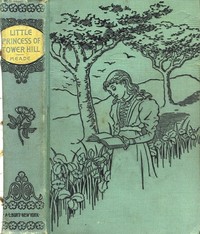
The Little Princess of Tower Hill — Background and Themes
(0 User reviews)
451
Project Gutenberg
2012
Not confirmed
Conduct of life -- Juvenile fiction; Children -- Conduct of life -- Juvenile fiction; Cousins -- Juvenile fiction; Social classes -- Juvenile fiction; Pets -- Juvenile fiction; Wealth -- Juvenile fiction; Obedience -- Juvenile fiction; Governesses -- Juvenile fiction; Only child -- Juvenile fiction
Readers of public-domain and historical texts
Project Gutenberg digital edition
en
Edition facts
Words
57,537
Reading time
251 min
Text sections
6
For The Little Princess of Tower Hill — Background and Themes, the stored edition analysis reports 57,537 words, 4 hr 11 min estimated reading time, and 6 detected text sections.
The text analysis averages about 18.9 words per sentence, while the detected sections provide another way to judge how the source is divided.
Project Gutenberg metadata also associates the work with “Conduct of life -- Juvenile fiction,” connecting these edition facts with the source record’s subject description.
Source:
Project Gutenberg record #38771
L. T. Meade's novel follows Maggie, an only child called 'the little princess,' whose wealth and status contrast with the poverty of other children. Excerpts show her sheltered life and a later encounter with a poor family, where dialect and domestic details reveal class differences.
Read the complete public-domain text at its original source.
Read on Project GutenbergThe opening chapter of L. T. Meade's The Little Princess of Tower Hill introduces Maggie Ascot, an only child whose father is a baronet. Village children envy her fine dresses, pony, and carriage, while the narrator notes that bonfires and roasted oxen marked her birth. The catalog subjects list 'Conduct of life,' 'Social classes,' and 'Wealth,' and the excerpts bear these out: Maggie is explicitly called 'the Little Princess of Tower Hill,' and her privileged position is established through concrete details—her white pony Snowball, a groom, and the contrast with children in 'darned and shabby frocks.'
Later excerpts shift to a different household: the Aylmer family, where Susy spends a shilling on treats for her sister Jo, just out of hospital. The dialogue is rendered in dialect ('Yere,' 'werry,' 'dandy-o-lions'), and the scene is rich with domestic particulars—a cracked teapot, a slice of ham, red herrings, and lollipops. This section, though part of the same volume, may belong to a separate story; the table of contents lists additional tales after the main novel.
Wealth and Its Discontents
The catalog assigns 'Wealth' and 'Obedience' as subjects, but the excerpts complicate these. Maggie's wealth is described as a source of envy, yet the narrative does not dwell on her happiness. Instead, the opening emphasizes the 'fuss' made over her and the villagers' longing. When Sir John Ascot later appears at the Aylmers' door, his entrance is marked by a 'sharp and somewhat imperative knock,' and Susy hides behind the sofa. The text does not reveal his purpose, but the power imbalance is clear: the wealthy baronet enters a humble room unannounced.
The Aylmer scene, by contrast, shows poverty managed with resourcefulness. Susy's careful shopping—'a shilling's worth to the uttermost farthing'—and her pride in a 'genteel board' suggest that the catalog subject 'Conduct of life' may apply more to her than to Maggie. The children's happiness is tied to small luxuries: fresh egg, shrimps, and a bunch of dandelions. Meade uses dialect and inventory to make this household vivid, while Maggie's world remains more abstract.
Only Child and Cousins: Family Structures
The catalog lists 'Only child' and 'Cousins' as subjects, but the excerpts offer limited evidence. Maggie is explicitly an only child, and the opening stresses that her parents were not disappointed she was a girl. No cousins appear in the provided text. The Aylmer family, however, includes siblings: Susy, Ben, Bob, and the convalescent Jo. Their interactions—Susy chasing the boys, the shared tea—depict a crowded, lively household that contrasts with Maggie's solitary privilege.
The term 'cousins' may refer to characters not yet introduced, or to the additional stories in the volume. The table of contents lists 'Tom, Pepper, and Trusty,' 'Billy Anderson and his Troubles,' and 'The Old Organ-Man,' which may involve cousin relationships. Readers should note that the main novel may be shorter than the full file suggests; the excerpts alone do not confirm how cousins figure into the plot.
Dialect, Detail, and the Governess
The catalog includes 'Governesses' and 'Pets,' but the excerpts show neither. Instead, the most striking linguistic feature is the Aylmer family's dialect: 'Yere,' 'ain't,' 'werry,' 'dandy-o-lions.' This phonetic rendering marks class and region, and it is used for comic and affectionate effect. Susy's speech is energetic and specific—'a slice of 'am on this tiny plate,' 'creases ditto.' The narrator's voice, by contrast, is standard literary English, creating a clear divide between the observer and the observed.
Pets are absent from the excerpts, though Maggie's pony Snowball is mentioned. The governess subject may emerge later; the chapter titles ('Snubbed,' 'The Empty Hutch,' 'Choosing Her Colors') hint at conflicts involving authority and possessions. The excerpts provide no evidence of a governess character, so readers should approach this subject with caution.
The excerpts present two distinct social worlds: Maggie's titled, wealthy household and the Aylmers' cramped London room. Meade's attention to material culture—from a cracked teapot to a white pony—grounds the story in tangible details. Readers may find it useful to track how the novel connects these spheres, and whether the 'little princess' ever steps beyond her gilded tower. The additional stories in this volume offer further examples of Meade's domestic realism.
Maggie’s world in The Little Princess of Tower Hill always felt so quiet and separate, those class lines drawn softer in memory than in fact. Reading it again, I remember noticing how few voices she truly heard—and that made me think of another old favorite, Behind the Green Door — Inside the Classic, which lingers on the same hush, the same half-open doors. Some stories just keep their rooms intact.
There are no reviews for this eBook.
There are no comments for this eBook.
Reader reflection
What was your reading experience?
Capture what you thought, learned, and would like to remember.
Your progress
0
/
10
2
How did the book work for you overall?
3
Would you recommend this book to another reader?
4
How easy was the book to follow?
5
How valuable was this book for your own interests?
6
Did you relate to its people, ideas, or situations?
7
Which aspect of the book did you value most?
8
Was the book moving at the right speed?
9
What did this book teach you most?
10