1

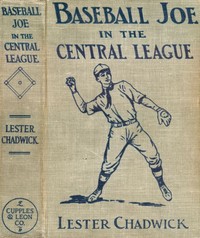
Baseball Joe in the Central League; or, Making Good as a Professional Pitcher — Story, Setting & Ideas
(0 User reviews)
101
Project Gutenberg
2013
Not confirmed
Conduct of life -- Juvenile fiction; Young men -- Conduct of life -- Juvenile fiction; Friendship -- Juvenile fiction; Diligence -- Juvenile fiction; Success -- Juvenile fiction; Baseball stories; Baseball players -- Juvenile fiction
Readers of public-domain and historical texts
Project Gutenberg digital edition
en
Edition facts
Words
56,483
Reading time
246 min
Text sections
6
For Baseball Joe in the Central League; or, Making Good as a Professional Pitcher — Story, Setting & Ideas, the stored edition analysis reports 56,483 words, 4 hr 6 min estimated reading time, and 6 detected text sections.
The text analysis averages about 13.4 words per sentence, while the detected sections provide another way to judge how the source is divided.
Project Gutenberg metadata also associates the work with “Conduct of life -- Juvenile fiction,” connecting these edition facts with the source record’s subject description.
Source:
Project Gutenberg record #41847
Examines Lester Chadwick's diction, dialogue, and description in this 1914 juvenile baseball novel, focusing on how Joe Matson's speech and actions convey his character under pressure.
Read the complete public-domain text at its original source.
Read on Project GutenbergFrom the opening line—"Why, here's Joe!"—Lester Chadwick establishes a conversational, family-centered tone that runs through Baseball Joe in the Central League. The dialogue is brisk and colloquial, with characters often speaking in short, exclamatory sentences that mirror the pace of a baseball game. Joe's own speech is marked by a cheerful, determined quality: he "grinned and made no answer" when reviled, and his boldness in addressing Mabel—"I guess because I knew you were watching me"—reveals a confident, earnest protagonist. Chadwick's descriptive passages are similarly efficient, focusing on physical actions and emotional states without extended introspection.
Diction and the Voice of a Young Athlete
Chadwick's word choice consistently reflects Joe's perspective as a young, athletic man. Verbs like "striding," "swinging," and "grinned" convey physicality and ease. When Joe speaks, his language is direct and unpretentious: "Mighty good to be home again!" The narrator rarely uses complex vocabulary, preferring plain terms like "plucky" and "splendid." This diction aligns with the juvenile adventure genre, but it also serves to characterize Joe as someone who acts rather than analyzes. Even in moments of tension—such as when he learns of his father's accident—his internal response is described through action: "Joe felt his heart beating hard, and then, bracing himself." The narrative voice stays close to Joe's own idiom, avoiding adult commentary or moralizing.
Dialogue as a Tool for Character and Conflict
Dialogue in the excerpts reveals character through contrast. Joe's mother and sister speak with hesitation and concern—"Of course we just..."—while Joe's replies are upbeat and reassuring. The exchange with Mabel after the game is particularly telling: her enthusiastic "However did you do it?" is met with Joe's flirtatious "I guess because I knew you were watching me!" This dialogue not only advances the romantic subplot but also shows Joe's ability to shift between earnestness and boldness. When the crowd cheers, the dialogue becomes collective and rhythmic: "Pittston wins!" "Three cheers for Joe Matson!" Chadwick uses such choral lines to heighten the drama of the game, while individual conversations—like the one with manager Gregory—provide quieter moments of support and camaraderie.
Descriptive Economy: Gesture and Setting
Chadwick's descriptions are spare but purposeful. Physical gestures carry emotional weight: Joe "swinging a heavy valise as though he enjoyed the weight of it" immediately establishes his vitality. Later, Clara "held up a warning finger" to signal their father's sleep, a small gesture that conveys the household's anxiety. Setting details are minimal—a cottage, a hotel, a train—but they serve as backdrops for action. The train ride home is described as "the very slowest kind of a freight, though it really was an express," a subjective observation that mirrors Joe's impatience. Chadwick avoids lengthy descriptions of baseball plays; instead, he focuses on the outcome ("Joe struck out the next man") and the crowd's reaction, trusting readers to fill in the action. This economy keeps the narrative moving at a brisk pace.
Recurring Motifs: Pluck and the Weight of Responsibility
Two motifs recur in the excerpts: the word "pluck" and the physical weight of objects. Joe is described as "plucky" by the crowd and his own actions confirm it—he pitches after hearing bad news and then hurries home. The heavy valise he swings at the start returns symbolically when he "hurried into the dressing room" and later "to get his grip." These objects—valise, grip—represent the burdens Joe carries: his professional duties and family worries. Chadwick also repeats the phrase "there is a chance" regarding his father's eyesight, linking the uncertainty of baseball to life's larger stakes. These motifs, while simple, give the story a cohesive emotional thread without heavy-handed symbolism.
Readers attentive to Chadwick's craft will notice how he uses dialogue and description to build a protagonist who is both typical of his genre and individually drawn. Joe's voice—cheerful, determined, occasionally bold—remains consistent whether he is on the mound or at home. The spare prose leaves room for readers to imagine the action, while the recurring motifs of pluck and responsibility give the story a quiet emotional weight. This editorial note encourages a focus on the author's choices in language and structure rather than on plot outcomes.
The rain kept me indoors with Chadwick’s book, watching Joe Matson sweat through every inning, his stubbornness somehow dignified. Later, thumbing the shelf, I paused at Ruth Fielding In the Saddle; Or, College Girls in the Land of Gold — Edition Insights. Both heroes face pressure with grit, though Ruth’s landscape is golden, not dusty. That afternoon, one story simply handed me the other.
There are no reviews for this eBook.
There are no comments for this eBook.
Reader reflection
How will you remember this book?
Save your reaction, strongest insight, and memorable passage.
Your progress
0
/
10
2
Did this book hold your interest?
3
Would you encourage someone else to read it?
4
How easy was the book to follow?
5
Did the book meet your expectations?
6
Did you relate to its people, ideas, or situations?
7
How useful were the ideas in this book?
8
Which part made the strongest impression?
9
Which lesson or insight stayed with you?
10