1

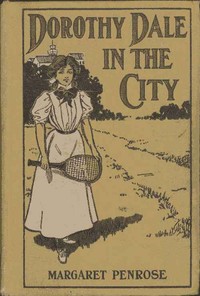
Dorothy Dale in the City — Themes and Context
(0 User reviews)
1647
Project Gutenberg
2012
Not confirmed
Christmas stories; Family -- Juvenile fiction; Practical jokes -- Juvenile fiction; City and town life -- Juvenile fiction; Children and adults -- Juvenile fiction; New York (N.Y.) -- Description and travel -- Juvenile fiction
Readers of public-domain and historical texts
Project Gutenberg digital edition
en
Edition facts
Words
55,675
Reading time
243 min
Text sections
8
This digital edition of Dorothy Dale in the City — Themes and Context is described by source-level measurements including 55,675 words, 4 hr 3 min estimated reading time, and 8 detected text sections.
The text analysis averages about 14.5 words per sentence, while the detected sections provide another way to judge how the source is divided.
Project Gutenberg metadata also associates the work with “Christmas stories,” connecting these edition facts with the source record’s subject description.
Source:
Project Gutenberg record #38555
This editorial note examines how Margaret Penrose uses rapid dialogue, shifting settings, and ironic contrasts between appearance and reality to create a lively, episodic narrative in Dorothy Dale in the City.
Read the complete public-domain text at its original source.
Read on Project GutenbergFrom the first chapter, Margaret Penrose establishes a brisk, conversational voice through rapid-fire dialogue and short, punchy paragraphs. The opening scene at Glenwood Hall, with girls packing for Christmas, moves at a breathless pace: Dorothy and Tavia trade quips about wrinkled clothes and bad luck while friends clamor at the door. This quick exchange sets the tone for a narrative that relies on spoken interaction to advance the story and reveal character.
Penrose often shifts from light banter to sudden, vivid description, as when the girls encounter a mannequin-like model in a department store. The prose lingers on her "wistful smile" and "tired droop" before shattering the illusion with her rude, slangy outburst. Such contrasts between expectation and reality recur throughout the excerpts, giving the novel a rhythm of buildup and deflation that mirrors the protagonists' own adjustments to city life.
Dialogue as Engine
Penrose drives the narrative almost entirely through dialogue. In the opening pages, Dorothy and Tavia’s conversation carries the exposition: we learn about their school, their friends, and their holiday plans without any authorial summary. The speech is colloquial and peppered with exclamations (“Oh, don’t!” “Listen! That’s bad luck!”), creating an informal, intimate tone. Even descriptive passages often arise from a character’s spoken observation, as when Tavia declares the model “the prettiest face I’ve ever dreamed of seeing.” This technique keeps the pace swift and the focus on the girls’ immediate reactions.
The dialogue also distinguishes characters: Dorothy tends toward practical, sympathetic remarks, while Tavia offers playful, sometimes ironic commentary. Their exchanges feel natural and unforced, though they occasionally serve to deliver moral or social observations—such as Dorothy’s remark that “one never knows what to believe is real in this hub-bub place.” Penrose trusts her characters’ voices to carry the story, minimizing intrusive narration.
Pace Shifts and Scene Changes
The novel’s structure relies on abrupt transitions between settings and moods. A typical sequence moves from a lively, crowded scene—like the chaotic packing at school—to a quieter moment of reflection, then to a new, often surprising location. For instance, after the disillusioning encounter with the model, Dorothy and Tavia decide to “take a taxi home,” and the next chapter opens with them preparing for a matinee. These jumps are not always explained; the reader must infer elapsed time and off-page events.
Penrose also varies pace within scenes. The department store episode begins with awed, slow description of the model’s appearance, then accelerates into the model’s brusque commands and the girls’ hasty retreat. This shift from lingering observation to rapid action mirrors the disorienting effect of city life on the protagonists. The narrative never dwells too long on any one moment, maintaining a forward momentum that suits the episodic, adventure-oriented plot.
Ironic Contrasts in Voice and Detail
A recurring pattern in the excerpts is the gap between how things appear and how they actually are—a theme reinforced by Penrose’s use of ironic detail. The most striking example is the model who seems “ethereal” and “wistful” but speaks in a coarse, impatient tone: “I ain’t got all day to wait! Gotta show ten more hats before closing.” The narrator undercuts the romantic description with the model’s own words, creating a sharp, humorous disillusionment.
Similarly, the girls’ expectations about city life are repeatedly deflated. They anticipate glamour but find artificiality (“the flowers were mostly artificial”) and rudeness. Penrose uses concrete, sensory details—like the “snow white plume” that curls “like a serpent” around the model’s throat—to hint at underlying danger or falseness. These contrasts are not labored; they emerge naturally from the girls’ observations, giving the novel a gentle satirical edge without losing its lighthearted tone.
Readers attentive to shifts in tempo and tone will notice how Penrose balances the girls’ wide-eyed wonder with moments of sharp, comic deflation. The narrative voice remains consistently close to Dorothy and Tavia, filtering the city through their changing perceptions. This makes the novel less a straightforward adventure than a series of vignettes about learning to see past surfaces—a lesson delivered not through moralizing, but through the rhythm of the prose itself.
Years ago, I shelved Dorothy Dale in the City and noticed how its hurried scenes mask a quieter truth beneath. That same gentle irony lives in Little Nettie; or, Home Sunshine — Reading Notes, where a child’s glowing simplicity hides her quiet strength. Two books, different worlds, sharing one hushed heartbeat.
There are no reviews for this eBook.
There are no comments for this eBook.
Reader reflection
What was your reading experience?
Capture what you thought, learned, and would like to remember.
Your progress
0
/
10
2
What was your overall reaction to the book?
3
Would you encourage someone else to read it?
4
Did the language feel accessible?
5
Did it raise ideas you would like to talk about?
6
Could you see yourself revisiting this book?
7
Did the book meet your expectations?
8
How would you rate its originality?
9
What changed or sharpened your thinking?
10