1

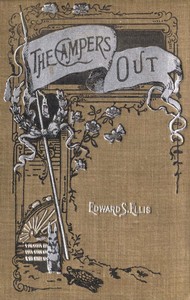
The Campers Out; Or, The Right Path and the Wrong — Text and Context
(0 User reviews)
895
Project Gutenberg
2013
Not confirmed
Conduct of life -- Juvenile fiction; Children -- Conduct of life -- Juvenile fiction; Friendship -- Juvenile fiction; Runaway children -- Juvenile fiction; Outdoor life -- Juvenile fiction; Theft -- Juvenile fiction; Good and evil -- Juvenile fiction
Readers of public-domain and historical texts
Project Gutenberg digital edition
en
Edition facts
Words
63,363
Reading time
276 min
Text sections
6
The catalog record for The Campers Out; Or, The Right Path and the Wrong — Text and Context provides practical reading context through 63,363 words, 4 hr 36 min estimated reading time, and 6 detected text sections.
The text analysis averages about 21.8 words per sentence, while the detected sections provide another way to judge how the source is divided.
Project Gutenberg metadata also associates the work with “Conduct of life -- Juvenile fiction,” connecting these edition facts with the source record’s subject description.
Source:
Project Gutenberg record #42504
Edward S. Ellis's 1893 novel follows two groups of boys—the Piketon Rangers and a trio of plotters—whose camping and scheming collide in a moral drama of right versus wrong, marked by tense confrontations, a bull-dog encounter, and a narrative voice that judges each character's choices.
Read the complete public-domain text at its original source.
Read on Project GutenbergThe novel opens not with a camping scene but with a classroom: Jim McGovern, struggling with a lesson, receives a note written in playful misspellings—"Meat Bill Waylett and me after scool at the cross roads, for the bizness is of the utmoast importants." This note, from Tom Wagstaff, sets in motion a plot that will entangle three boys in schemes of revenge and theft. The narrative voice immediately establishes a moral framework, referring to Jim as "the evil youth" and commenting on his intentions. The story alternates between the plotters—Jim, Tom, and Billy—and the more upright Piketon Rangers, led by Dick Halliard. Ellis uses the camping setting not merely as backdrop but as a stage for testing character, where a dog named Bowser becomes an instrument of justice, and a light in an upper window signals a parent's illness, complicating a would-be attacker's resolve.
The Plotters' Language and Moral Framing
The note that launches the action is a small masterpiece of phonetic spelling: "the iurn is hot and we must strike be4 it gits cool." Ellis uses this not just for humor but to mark the plotters as uneducated and impulsive. The narrative voice, however, is anything but neutral. It refers to Jim as "the evil youth" and speculates whether knowledge of a sick parent would have "restrained him from pushing on with his scheme of revenge." This direct moral commentary, typical of juvenile fiction of the era, guides the reader's judgment without ambiguity. The contrast between the plotters' crude language and the narrator's polished, judgmental tone creates a tension that underscores the book's central dichotomy: the right path versus the wrong.
Bowser as a Moral Instrument
When Jim McGovern approaches Dick Halliard's house to exact revenge, he is thwarted not by a person but by a dog. Bowser, the "big bull-dog," appears around the corner, and Jim's instinct to run triggers the chase. The narrator notes that had Jim "kept his place he would not have been molested, for Bowser was too well trained to harm any one calling in the right way." The dog thus becomes a moral barometer: he attacks only those whose intentions are wrong. Dick Halliard calls off the dog, but the damage is done—Jim flees in terror. This episode, drawn from the excerpts, shows how Ellis uses animal behavior to enforce ethical boundaries, a pattern that likely recurs throughout the novel.
Setting as a Stage for Moral Contrast
The excerpts place key scenes in liminal spaces: the crossroads, the forest path, the swamp, and the front gate of a modest home. These settings are not merely picturesque; they serve as arenas where choices are made visible. The crossroads, where the plotters meet, suggests a decision point. The swamp, mentioned in a chapter title, implies disorientation and danger. Dick Halliard's home, with its single lit window, becomes a site of vulnerability and potential violence. Ellis repeatedly uses the physical environment to mirror internal states: Jim's stealthy approach to the gate is described as "like a burglar," and the dog's attack occurs at the threshold. The setting thus reinforces the book's moral geography, where right action leads to safety and wrong action to exposure and flight.
Readers approaching The Campers Out should attend to the narrator's frequent interjections, which function as a running moral gloss on events. The excerpts suggest that Ellis is less interested in suspense than in demonstrating consequences: every wrong choice, from a misspelled note to a planned assault, leads to a comeuppance. The camping framework provides opportunities for both freedom and peril, but the real drama lies in the characters' internal battles. Pay attention to how the author uses animals, light, and thresholds to signal which path a character has chosen.
Reading about the Piketon Rangers’ messy choices, I remembered the summer my brother and I found an old compass and argued over which path led home. That same quiet tug of conscience came back with Dorothy Dale in the City, where a girl’s small kindness outshone every grand plan. Some stories simply hold a mirror up to our own hesitations. Dorothy Dale in the City — Themes and Context felt like that, too—less about adventure, more about the pause before deciding.
There are no reviews for this eBook.
There are no comments for this eBook.
Reader reflection
How will you remember this book?
Save your reaction, strongest insight, and memorable passage.
Your progress
0
/
10
2
How much did you enjoy the reading experience?
3
How likely are you to recommend this book?
4
How easy was the book to follow?
5
Did the story or argument move comfortably?
6
Would you read this book again?
7
How clearly were the main ideas presented?
8
How closely did the book connect with your experience?
9
What is the main idea you are taking away?
10