1

The Little Colonel in Arizona — Reading Notes
(0 User reviews)
378
Project Gutenberg
2012
Not confirmed
Western stories; Friendship -- Juvenile fiction; Indians of North America -- Juvenile fiction; Boardinghouses -- Juvenile fiction; Ambition -- Juvenile fiction; Arizona -- Description and travel -- Juvenile fiction; Ranch life -- West (U.S.) -- Juvenile fiction
Readers of public-domain and historical texts
Project Gutenberg digital edition
en
Edition facts
Words
74,033
Reading time
322 min
Text sections
9
The source record for The Little Colonel in Arizona — Reading Notes measures this digital text at 74,033 words, 5 hr 22 min estimated reading time, and 9 detected text sections.
The text analysis averages about 17.4 words per sentence, while the detected sections provide another way to judge how the source is divided.
Project Gutenberg metadata also associates the work with “Western stories,” connecting these edition facts with the source record’s subject description.
Source:
Project Gutenberg record #39599
This editorial note examines Annie Fellows Johnston's authorial choices in diction, dialogue, and description within 'The Little Colonel in Arizona,' focusing on how speech patterns, narrative voice, and sensory details shape character and setting.
Read the complete public-domain text at its original source.
Read on Project GutenbergAnnie Fellows Johnston opens The Little Colonel in Arizona with a train scene that immediately establishes a key authorial strategy: using dialogue to reveal character and advance exposition. The opening line—'Joyce, said Jack Ware, stopping beside his sister’s seat'—plunges readers into a family dynamic where speech acts as both plot engine and personality marker. Jack’s complaint about Mary’s chatter, described as going 'through the car like a fine-pointed needle,' demonstrates Johnston’s habit of embedding vivid, tactile metaphors in everyday conversation. This technique recurs throughout the excerpts, where characters’ voices—from Lloyd’s Southern-inflected 'nevah' and 'murdahah' to the White Bachelor’s laconic drawl—carry distinct regional and social identities.
Dialect as Character Signature
Johnston assigns each major character a distinctive speech pattern that functions almost as a verbal costume. Lloyd’s dialogue is peppered with elisions and Southern cadences: 'I wouldn’t touch it for the world,' she declares, and later, 'I just can’t beah to touch dead things.' Her pronunciation of 'beah' for 'bear' and 'murdahah' for 'murderer' marks her as a genteel Southern girl transplanted to the West. In contrast, Jack’s speech is more clipped and practical—'I never once thought of quicksand'—reflecting his matter-of-fact nature. The White Bachelor’s amused 'Haw! Haw!' and his observation that Lloyd seemed 'a strange species of womankind' use colloquial bluntness to underscore cultural friction. Johnston does not merely report dialect; she weaves it into the narrative’s texture, so that a character’s way of speaking becomes a shorthand for their background, temperament, and role in the story.
Descriptive Economy in Action Scenes
Johnston’s descriptive prose in action sequences is notably lean, favoring concrete details over elaborate exposition. The duck hunt episode is rendered through brisk, physical verbs: 'He held out the fowl,' 'she drew back,' 'he swung his heels against the sides of his old white horse.' The setting is sketched with minimal strokes—'bushes,' 'saddle,' 'water'—leaving the focus on character reactions. When Lloyd realizes the danger of quicksand, Johnston shifts to internal reflection: 'Lloyd grew serious as she realized the danger he had escaped.' This alternation between external action and internal response creates a rhythm that keeps the scene moving while allowing moments of emotional weight. The author avoids lengthy landscape descriptions, instead embedding setting details within character perception, as when Jack notes that quicksand is 'all through Southern Arizona.'
The Function of Humor and Embarrassment
Johnston uses humor and embarrassment as tools to expose social dynamics and individual vulnerabilities. Jack’s mortification at being discussed by Mary—'I fell all over myself getting out of sight'—is rendered with a light, almost theatrical touch that invites reader sympathy. The White Bachelor’s teasing of Lloyd—'Afraid of a dead duck!'—sparks a defensive outburst that reveals her pride and sensitivity. These moments of social friction are not merely comic relief; they serve to delineate the characters’ values and insecurities. Lloyd’s vehement denial—'I’m not afraid of anything!'—contrasts with her later admission of squeamishness, suggesting a tension between her self-image and her actual reactions. Johnston’s dialogue captures these contradictions without editorial comment, letting the characters’ words and actions speak for themselves.
Recurring Motifs of Transformation and Exchange
Several recurring motifs in the excerpts hint at broader thematic concerns. The exchange of feathers after the duck hunt—Lloyd plans to send them to family members, and Jack asks for one 'to remember my first duck hunt'—transforms a trophy into a token of relationship and memory. This motif of giving and receiving objects as symbols of connection appears elsewhere: Jack’s earlier embarrassment over Mary’s chatter leads to a request for intervention, and Lloyd’s gift of a feather to Jack carries an undercurrent of gratitude and burgeoning friendship. Johnston also uses the motif of transformation through action: Jack, initially seen 'over my elbows in a washtub,' later emerges as a resourceful hunter. These small, repeated patterns give the narrative a cohesive texture, suggesting that even in a juvenile adventure story, authorial choices about objects and gestures carry meaning beyond plot mechanics.
Readers attentive to Johnston’s craft will notice how she balances regional authenticity with narrative clarity, never letting dialect obscure meaning. The excerpts suggest a writer who trusts her characters’ voices to carry exposition and emotion alike. For those approaching the full text, observing how these early patterns—of speech, gesture, and symbolic exchange—develop across the novel may enrich the reading experience. The author’s choices in diction and description reward close attention, offering a window into early twentieth-century juvenile fiction’s strategies for building believable, engaging worlds.
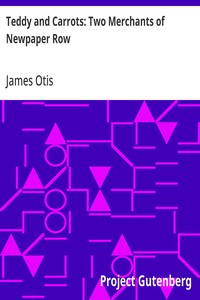
Reading this note on The Little Colonel in Arizona, I remembered my own grandmother’s clipped way of speaking “land sakes,” and how quiet moments in that dusty heat felt like waiting. Another book stirred that same hush once—Teddy and Carrots: Two Merchants of Newpaper Row — Key Ideas to Explore—where boys’ rough talk somehow held a similar tenderness. Memory lingers in accents, not plots.
There are no reviews for this eBook.
There are no comments for this eBook.
Reader reflection
What did you think of this book?
Answer a few questions and save a private reflection on this device.
Your progress
0
/
10
2
How did the book work for you overall?
3
Would you encourage someone else to read it?
4
How demanding did the text feel?
5
How strongly did the book affect you emotionally?
6
How did the reading compare with what you expected?
7
Which element worked best for you?
8
How original did the book feel?
9
Which lesson or insight stayed with you?
10