1

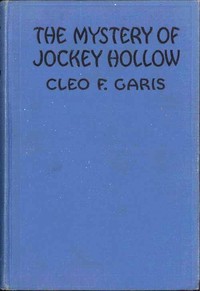
The Mystery of Jockey Hollow Arden Blake Mystery Series #2 — Story, Setting & Ideas
(0 User reviews)
81
Project Gutenberg
2012
Not confirmed
Friendship -- Juvenile fiction; Holidays -- Juvenile fiction; Young women -- Juvenile fiction; Mystery and detective stories; Women college students -- Juvenile fiction; Ghosts -- Juvenile fiction; Haunted houses -- Juvenile fiction; Buildings -- Repair and reconstruction -- Juvenile fiction
Readers of public-domain and historical texts
Project Gutenberg digital edition
en
Edition facts
Words
50,403
Reading time
220 min
Text sections
8
This digital edition of The Mystery of Jockey Hollow Arden Blake Mystery Series #2 — Story, Setting & Ideas is described by source-level measurements including 50,403 words, 3 hr 40 min estimated reading time, and 8 detected text sections.
The text analysis averages about 12.4 words per sentence, while the detected sections provide another way to judge how the source is divided.
Project Gutenberg metadata also associates the work with “Friendship -- Juvenile fiction,” connecting these edition facts with the source record’s subject description.
Source:
Project Gutenberg record #40667
In this 1934 mystery, college student Arden Blake and her friends investigate a supposedly haunted Revolutionary-era mansion, Jockey Hollow, where a contractor's accident shifts the puzzle from ghostly pranks to possible human malice.
Read the complete public-domain text at its original source.
Read on Project GutenbergThe Mystery of Jockey Hollow opens not with a ghost but with a radio, a letter, and a pair of patent-leather opera pumps. In the first chapter, Arden Blake is curled up reading ghost stories while her friend Terry Landry, impatiently tapping her foot, tries to summon Sim. The scene establishes a domestic, college-age world where mysteries are initially treated as amusing puzzles. The catalog subjects list ghosts, haunted houses, and holidays, but the excerpts show that the supernatural is immediately questioned: Arden declares, “I don’t believe it’s a ghost house at all.” The real tension emerges from a workman’s accident in an ash-chute, prompting Sim to say, “This isn’t a ghost story, it’s a detective story now.” The book balances lighthearted banter with a serious investigation into property rights and labor disputes.
From Ghost Stories to Detective Work
The catalog labels this a mystery and detective story, but the excerpts reveal a deliberate shift in genre within the narrative. Early on, Arden reads a book of ghost stories, and the friends treat the haunting of Jockey Hollow as an amusing puzzle. However, after Jim Danton falls down an ash-chute and is injured, the tone changes. Sim declares, “This isn’t a ghost story, it’s a detective story now.” Arden agrees: “It must be real and it must have humans in it.” The novel thus explicitly rejects supernatural explanations, reframing the mystery as a human crime. This move is reinforced by Sim’s suggestion of “labor troubles”—that a rival contractor might be sabotaging the demolition. The excerpts show the characters consciously choosing a rational, investigative approach over credulity.
The Material Details of an Old House
Jockey Hollow is described as a “proud old house” with a cellar, an ash-chute, and “hand-forged hooks” in a closet. These details ground the mystery in physical objects rather than spectral apparitions. The ash-chute becomes a site of real danger, not supernatural fright. Arden’s observation that the house is of “Revolutionary importance” and may contain valuable “pickings” introduces an economic motive. The catalog subject “Buildings -- Repair and reconstruction” is borne out by the plot: the mansion is being torn down, and the contractor Mr. Callahan is central to the conflict. The excerpts emphasize that the haunting is tied to the building’s material history and its potential for salvage, not to any ghostly presence.
Friendship and Collective Investigation
The catalog lists “Friendship -- Juvenile fiction,” and the excerpts show a tight-knit group of girls—Arden, Sim, Terry, and Dot—working together. They share information, drive to visit the injured workman’s family, and promise to help Granny Howe prove her claim to the property. The dialogue is collaborative: “We’ve got something to think of now,” Sim says, and Arden responds, “We’re all going to help you!” The investigation is a group effort, with each friend contributing observations. The excerpts do not show a lone sleuth but a collective, and the girls’ interactions are marked by teasing and concern. This social dynamic is as central to the story as the mystery itself, reflecting the series’ focus on young women’s camaraderie.
Readers approaching The Mystery of Jockey Hollow should expect a story that uses ghost-tropes only to dismantle them. The excerpts suggest that the novel rewards attention to physical clues—the ash-chute, the hooks, the contractor’s insurance—rather than spectral ones. The friendship among the four girls provides a steady, reassuring counterpoint to the escalating danger. The book is best read as a rational mystery set in a specific historical and economic context, not as a supernatural tale.
There are stories that follow you home, and that old mansion in The Mystery of Jockey Hollow felt that way—its quiet menace stayed with me long after the last page. That lingering sense of place reminds me of something gentler, The House That Grew — Story, Setting & Ideas, where a house almost breathes. Different mood, same shadowy warmth. I still think about both.
There are no reviews for this eBook.
There are no comments for this eBook.
Reader reflection
How did this book work for you?
Your answers remain private and are stored only in this browser.
Your progress
0
/
10
2
How did the book work for you overall?
3
Is this a title you would suggest to others?
4
What was the reading difficulty like?
5
Could you see yourself revisiting this book?
6
Did the story or argument move comfortably?
7
Did it raise ideas you would like to talk about?
8
What was the strongest part of the book?
9
What did this book teach you most?
10