1

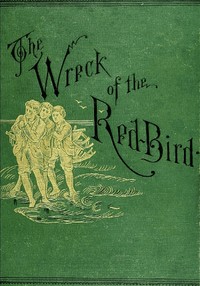
The Wreck of the Red Bird: A Story of the Carolina Coast — Reading Companion
(0 User reviews)
605
Project Gutenberg
2012
Not confirmed
Conduct of life -- Juvenile fiction; Boys -- Conduct of life -- Juvenile fiction; Shipwreck survival -- Juvenile fiction; Friendship -- Juvenile fiction; Sailing -- Juvenile fiction; Natural history -- Juvenile fiction; Rescues -- Juvenile fiction; Shipwrecks -- Juvenile fiction; African Americans -- Juvenile fiction; South Carolina -- Juvenile fiction
Readers of public-domain and historical texts
Project Gutenberg digital edition
en
Edition facts
Words
44,018
Reading time
192 min
Text sections
5
Before opening The Wreck of the Red Bird: A Story of the Carolina Coast — Reading Companion, the edition data offers a quick orientation: 44,018 words, 3 hr 12 min estimated reading time, and 5 detected text sections.
The text analysis averages about 16.9 words per sentence, while the detected sections provide another way to judge how the source is divided.
Project Gutenberg metadata also associates the work with “Conduct of life -- Juvenile fiction,” connecting these edition facts with the source record’s subject description.
Source:
Project Gutenberg record #40941
George Cary Eggleston's 1882 juvenile adventure uses precise coastal Carolina dialect and detailed survival craft to follow three boys after a shipwreck. The author's choices in dialogue, natural description, and problem-solving scenes reveal a deliberate focus on practical knowledge and character through action.
Read the complete public-domain text at its original source.
Read on Project GutenbergFrom the first line of dialect—"Bress my heart, honey, wha'd you come from?"—George Cary Eggleston establishes a coastal Carolina voice that distinguishes Maum Sally from the three white boys. The author's choice to render her speech phonetically while giving the boys standard English marks a clear social and racial boundary, yet Maum Sally is not a caricature: she is the first to speak, she is in her kitchen, and she greets Ned warmly. Eggleston uses this contrast to signal that the story's world includes multiple registers of language, and that understanding who speaks how is part of navigating the setting.
Dialect as a Marker of Place and Power
Eggleston assigns distinct speech patterns to different characters. Maum Sally's opening line uses dropped consonants and vowel shifts typical of Gullah-influenced coastal speech: "Bress my heart, honey, wha'd you come from?" and later "Is you done come to visit de folks?" The boys, by contrast, speak in unmarked standard English. This is not a neutral choice—it aligns the reader with the boys' perspective and treats Maum Sally's dialect as colorful local color rather than a full linguistic system. Yet Eggleston does not let her become a mere comic figure; her kitchen is the first setting, and she initiates the action by greeting Ned. The author also uses dialect sparingly in narration, reserving it for direct dialogue, which keeps the story's voice consistent while giving the characters verbal individuality.
Practical Knowledge Shown Through Action
Eggleston builds the boys' competence not through exposition but through their decisions and dialogue. When Charley needs to carry rice, he says, "seeing that we haven't any wagon, or bag, or sheet, or any thing else to carry rice in, except trowsers, I'm going to use trowsers." The line reveals his resourcefulness and humor, and the author lets the reader infer the boys' situation from the absence of equipment. Later, when Ned sets out to find Charley, the narrative notes that "he struck the ground frequently, as a precaution against the danger of stepping upon any snake" and that he heard "the venomous creatures hiss angrily before scurrying away." These details are not explained as lessons; they are simply what a careful boy would do in that environment. Eggleston trusts the reader to recognize the danger and the skill involved.
The Physical Cost of Adventure
Eggleston does not gloss over the bodily consequences of the boys' actions. When Ned walks through the brush, "his scanty clothing was nearly torn from his body and his skin was badly lacerated." The description is specific and unglamorous: "his legs, hands, and face suffered not a little." Jack, left behind, "paced up and down by the fire, as a caged tiger does," and the narrative dwells on his "morbid fancies" and the "necessity of inactivity" as a form of torture. These passages give weight to the adventure by showing that fear and pain are real, not just narrative hurdles. The author's choice to describe Jack's anxiety in animal terms—"caged tiger"—links his emotional state to the physical confinement of waiting, making the interior experience as vivid as the exterior danger.
Narrative Voice and the Dedication's Shadow
The book's front matter includes a dedication that reveals the author's personal loss: Eggleston writes that his son Guilford, who helped create the story, is now "my dear dead boy." This knowledge colors the narrative voice, which is consistently warm toward the boys' courage and affection. When Ned calls Jack "you great big-hearted, generous fellow!" the praise feels earned within the story, but the dedication reminds us that the author was writing from a place of grief. Eggleston does not let sentimentality soften the prose—the boys remain practical, sometimes terse—but the dedication gives an emotional frame that makes the boys' mutual care more poignant. The authorial choice to include that personal note invites readers to see the adventure as both a tribute and a memorial.
Readers attentive to Eggleston's craft will notice how much he conveys through what characters do and say rather than through authorial explanation. The boys' competence is demonstrated, not claimed; their fear is shown through physical detail, not named. The coastal setting is built from specific hazards—snakes, briars, darkness—and from the characters' responses to them. This is a story that rewards attention to the small, concrete choices that make the world feel inhabited and the dangers real.
Those boys in The Wreck of the Red Bird stayed with me for how they just got things done, no fuss, just skill. It reminded me, oddly, of another kind of quiet resilience I found in A Very Naughty Girl — Themes and Context. Both books trust their characters to simply be, letting their natures unfold without much authorial nudging. A familiar, patient feeling, like watching sunlight move across a floor.
There are no reviews for this eBook.
There are no comments for this eBook.
Reader reflection
How will you remember this book?
Save your reaction, strongest insight, and memorable passage.
Your progress
0
/
10
2
Was reading this book enjoyable?
3
Would you recommend this book to another reader?
4
What was the reading difficulty like?
5
How understandable was the text?
6
How did the pace of the book feel?
7
What was the strongest part of the book?
8
How useful were the ideas in this book?
9
Which lesson or insight stayed with you?
10