1

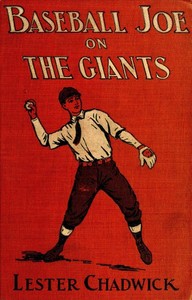
Baseball Joe on the Giants; or, Making Good as a Ball Twirler in the Metropolis — Context and Discussion
(0 User reviews)
824
Project Gutenberg
2013
Not confirmed
Conduct of life -- Juvenile fiction; Young men -- Conduct of life -- Juvenile fiction; Diligence -- Juvenile fiction; Success -- Juvenile fiction; Theft -- Juvenile fiction; Baseball stories; Baseball players -- Juvenile fiction; New York Giants (Baseball team) -- Juvenile fiction
Readers of public-domain and historical texts
Project Gutenberg digital edition
en
Edition facts
Words
59,482
Reading time
259 min
Text sections
7
The source record for Baseball Joe on the Giants; or, Making Good as a Ball Twirler in the Metropolis — Context and Discussion measures this digital text at 59,482 words, 4 hr 19 min estimated reading time, and 7 detected text sections.
The text analysis averages about 16.1 words per sentence, while the detected sections provide another way to judge how the source is divided.
Project Gutenberg metadata also associates the work with “Conduct of life -- Juvenile fiction,” connecting these edition facts with the source record’s subject description.
Source:
Project Gutenberg record #43021
This editorial note examines how Lester Chadwick's 1916 baseball novel blends on-field action with moral lessons, focusing on the tension between catalog subjects like diligence and theft and the actual narrative's emphasis on popularity, romance, and newspaper fame.
Read the complete public-domain text at its original source.
Read on Project GutenbergLester Chadwick's Baseball Joe on the Giants (1916) opens not with a baseball diamond but with a gymnasium scene where Joe Matson is urged to “split the ozone” by a chorus of friends. The catalog subjects list “Conduct of life,” “Diligence,” and “Success,” yet the first chapter emphasizes Joe's easy popularity and the crowd's fervor that “spoke volumes for the popularity of the young pitcher.” This tension between moral instruction and the hero's social charm runs throughout the excerpts.
Popularity as a Narrative Engine
The catalog subjects highlight “Conduct of life” and “Diligence,” but the excerpts show Joe's success is repeatedly tied to his likability. In the opening, the boys' cries “You bet it does!” reflect a collective admiration that seems to precede any demonstration of skill. Later, when Joe meets Mabel and Reggie, the dialogue focuses on his newspaper fame and the “handsome young man” remark. The narrative relies on Joe's social standing rather than his work ethic to advance the plot. Even the theft subject—Reggie's financial troubles—is handled through personal relationships: Reggie's “trusting disposition” leads to a confession, not a moral lesson on diligence. The story prioritizes Joe's charm over the catalog's implied virtues.
The Theft Subplot and Its Treatment
One catalog subject is “Theft,” and the excerpts hint at this through Reggie's confession and his “trusting disposition.” However, the theft is not depicted as a crime requiring justice but as a personal failing that can be resolved through friendship. When Reggie confesses, Joe's reaction is not anger but continued cordiality: “How are you, Reggie, old man!” The narrative treats the theft as a plot device to showcase Joe's forgiving nature rather than to explore moral consequences. This aligns with the book's focus on making good socially, not ethically. The catalog subject “Theft” thus appears more as a narrative convenience than a genuine exploration of wrongdoing.
Baseball as a Backdrop for Romance and Fame
Despite being a baseball story, the excerpts devote significant space to Joe's interactions with Mabel. Their meeting on the train involves a newspaper account of Joe's heroics at a lumber yard, which Mabel reads “from beginning to end.” The romance is advanced through shared admiration of Joe's public image, not through baseball action. The chapter “The Giant Team” focuses on Joe's reunion with Reggie and Mabel, with baseball only mentioned as Joe's destination. The catalog subject “Baseball stories” is accurate, but the excerpts suggest the sport serves as a setting for personal relationships and newspaper fame rather than detailed athletic competition. The narrative's energy comes from social dynamics, not the game itself.
Readers approaching this book through its catalog subjects should note that the moral categories—diligence, conduct, theft—are filtered through a lens of popularity and romance. The excerpts show a story more concerned with Joe's social success than with explicit lessons. The baseball elements, while present, often recede behind character interactions and newspaper clippings. This note encourages attention to how the narrative prioritizes personal charm over the stated virtues.
I kept thinking about that old Baseball Joe story, how it promised lessons but really lingered on the thrill of the crowd. It made me wonder about the quieter season before New York, where he’s still finding his feet. There’s something tender about that in-between time. I found it recalled in Baseball Joe in the Central League; or, Making Good as a Professional Pitcher — Story, Setting & Ideas, almost like a memory of a memory.
There are no reviews for this eBook.
There are no comments for this eBook.
Reader reflection
How will you remember this book?
Save your reaction, strongest insight, and memorable passage.
Your progress
0
/
10
2
What was your overall reaction to the book?
3
How likely are you to recommend this book?
4
How much effort did this book require?
5
Would you like to discuss this book with someone?
6
Did anything about the book feel genuinely new?
7
Which element worked best for you?
8
Did this book create an emotional response?
9
What did this book teach you most?
10