1

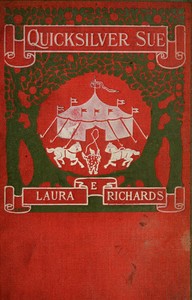
Quicksilver Sue — Background and Themes
(0 User reviews)
2019
Project Gutenberg
2013
Not confirmed
Conduct of life -- Juvenile fiction; Girls -- Conduct of life -- Juvenile fiction; Friendship -- Juvenile fiction; Best friends -- Juvenile fiction; Mothers and daughters -- Juvenile fiction; Jealousy in children -- Juvenile fiction
Readers of public-domain and historical texts
Project Gutenberg digital edition
en
Edition facts
Words
33,028
Reading time
144 min
Text sections
4
Quicksilver Sue — Background and Themes can be approached with a clearer sense of reading commitment from its source measurements: 33,028 words, 2 hr 24 min estimated reading time, and 4 detected text sections.
The text analysis averages about 13.7 words per sentence, while the detected sections provide another way to judge how the source is divided.
Project Gutenberg metadata also associates the work with “Conduct of life -- Juvenile fiction,” connecting these edition facts with the source record’s subject description.
Source:
Project Gutenberg record #42246
This editorial note examines the structure and recurring images in Laura E. Richards' 'Quicksilver Sue,' focusing on movement between domestic and social scenes, the motif of constriction, and the contrast between impulsive speech and restrained dialogue.
Read the complete public-domain text at its original source.
Read on Project GutenbergLaura E. Richards' Quicksilver Sue opens with a door banging and a mother's weary sigh—a small but telling detail that signals the novel's interest in the friction between a child's impulsive energy and the constraints of domestic life. The narrative moves rapidly between the Penrose home, the hotel, and outdoor settings, each shift marked by a change in tone and physical sensation. Sue's quick, unthinking movements contrast with the stillness of her mother, who speaks only when roused by bad grammar. This editorial note traces three structural patterns: the rhythm of arrival and departure, the recurring image of tight clothing as a metaphor for social pressure, and the way dialogue accelerates or stalls depending on the speaker.
Doors, Windows, and Thresholds
The story's structure depends on characters crossing thresholds. Sue bursts into rooms, bangs doors, and runs to tell Mary news before her mother can finish a sentence. The hotel, a new social space, is described through its freshly painted rooms and new curtains—an invitation that also implies exclusion. Later, Mary stations herself at a window, watching for Sue. These repeated movements between inside and outside create a rhythm of approach and withdrawal. The excerpts show Sue always in motion, while Clarice remains indoors, complaining of headaches. The threshold becomes a site of negotiation: Sue urges Clarice to come out for fresh air, but Clarice refuses. The novel's chapters, with titles like 'The Lonely Road' and 'Early in the Morning,' reinforce this pattern of journey and return.
The Girdle of Iron: Constriction as Motif
A striking recurring image is that of physical constriction. Sue's mother feels her head 'go through my head like a needle'; later, when Clarice laces Sue into a blue muslin dress with stays, Sue feels 'girded by a ring of iron.' The discomfort is immediate and visceral: she can hardly breathe. The dress, meant to make her look 'alegant,' becomes a cage. This moment echoes the earlier description of Sue's mother sinking back with a 'weary, fretful sigh'—both women are pressed upon by expectations. Sue's own 'free, natural figure' resists the stays, and she returns gratefully to her 'good belted frock.' The image of tightness recurs in Clarice's headaches, which follow candy-eating and confinement. The novel uses these physical sensations to dramatize the pressure of social performance.
Voices in Collision: Speech and Silence
Dialogue in Quicksilver Sue moves between two poles: Sue's rapid, exclamatory speech and Clarice's languid, possessive murmurs. Sue's first line—'Mother! Mother! he has a daughter!'—is all exclamation and repetition. Her mother corrects her grammar ('very rich'), but Sue's energy cannot be contained. Clarice, by contrast, speaks in pouts and stipulations: 'all should be forgiven' but 'they should not talk any more about Mary Hart.' The conversation about the stays shows Clarice overriding Sue's protests with flattery and persistence. When Sue offers to read Rob Roy, Clarice detests it but has 'nothing else to do.' The novel's structure of alternating scenes—Sue with Mary, Sue with Clarice—highlights how each relationship shapes her speech. Mary is mentioned as a corrective ('I am sure you never hear Mary Hart say'), but Mary herself rarely speaks in the excerpts; her presence is felt through Sue's reported loyalty.
The Picnic and the Hotel: Two Social Stages
The novel sets its key scenes in contrasting social spaces. The picnic (Chapter V) is outdoors, communal, and associated with freedom; the hotel (Chapter VI) is indoor, hierarchical, and linked to display. The illustrations listed—'On the Way to the Picnic' and 'At the Circus'—suggest movement and spectacle. At the hotel, Clarice's room is described as 'close,' and Sue feels trapped. The picnic, by contrast, implies open air and shared activity. The chapter titles themselves form a sequence: 'Something Exciting,' 'The New-Comer,' 'Mary's View,' 'Early in the Morning,' 'The Picnic,' 'At the Hotel.' This alternation between domestic and public, familiar and strange, structures Sue's education in friendship. The excerpts do not reveal the outcome, but the pattern suggests that Sue must learn to navigate between these worlds without losing her own 'free, natural figure.'
Readers attentive to movement and constraint will notice how often Sue's body is described in terms of speed or pressure—she is 'quicksilver,' always in motion, yet repeatedly checked. The novel's structure, built on arrivals and departures, invites us to ask what kind of space Sue can truly inhabit. The excerpts offer no resolution, but the pattern of thresholds crossed and dresses discarded points toward a story about finding one's own fit.
That rainy afternoon, Quicksilver Sue kept circling the idea of being squeezed—into rooms, into manners, into words held back. I closed it feeling that pressure myself, and my eye landed on another, plainer book whose children simply build a home out of a boxcar. The Box-Car Children — Story, Setting & Ideas felt like opening a window. Their freedom was quiet, but it was there.
There are no reviews for this eBook.
There are no comments for this eBook.
Reader reflection
Your personal reading reflection
Build a private reading journal entry for this title.
Your progress
0
/
10
2
Was reading this book enjoyable?
3
Is this a title you would suggest to others?
4
How much effort did this book require?
5
Did any part of the book feel personally relevant?
6
How distinctive were its ideas or approach?
7
Could you follow the author’s main argument?
8
Did you gain anything practical from the text?
9
What is the main idea you are taking away?
10