1

The Box-Car Children — Story, Setting & Ideas
(0 User reviews)
929
Project Gutenberg
2013
Not confirmed
Orphans -- Juvenile fiction; Conduct of life -- Juvenile fiction; Children -- Conduct of life -- Juvenile fiction; Siblings -- Juvenile fiction; Adventure and adventurers -- Juvenile fiction; Families -- Juvenile fiction; Boxcar children (Fictitious characters) -- Juvenile fiction
Readers of public-domain and historical texts
Project Gutenberg digital edition
en
Edition facts
Words
27,770
Reading time
121 min
Text sections
4
The source record for The Box-Car Children — Story, Setting & Ideas measures this digital text at 27,770 words, 2 hr 1 min estimated reading time, and 4 detected text sections.
The text analysis averages about 12.7 words per sentence, while the detected sections provide another way to judge how the source is divided.
Project Gutenberg metadata also associates the work with “Orphans -- Juvenile fiction,” connecting these edition facts with the source record’s subject description.
Source:
Project Gutenberg record #42796
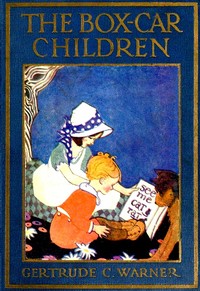
Gertrude Chandler Warner's 1924 original follows four orphaned siblings who flee a cruel grandfather and create a self-sufficient home in an abandoned boxcar. The narrative balances resourceful independence with the looming threat of discovery, as seen in the children's cautious movements and the reward advertisement for their capture.
Read the complete public-domain text at its original source.
Read on Project GutenbergThe opening chapter of Gertrude Chandler Warner's 1924 novel establishes a pattern of deliberate concealment. When the baker's woman presses the children about their grandfather, the youngest blurts out a crucial detail before his sister claps her hand over his mouth. This moment—a slip quickly suppressed—signals how the entire story will hinge on what is said and unsaid. The children's refusal to name their former home, their careful timing when leaving the cherry orchard, and their nightly inspections of their boxcar all reinforce a world where safety depends on secrecy.
The Weight of a Name
The name James Henry Cordyce appears twice in the excerpts, each time with a whistle of recognition. A young man reading a lost-children advertisement repeats it with astonishment: “James Henry Cordyce! Of all people!” The name carries weight before the man himself appears. When Cordyce is introduced in his steel-mill office, the description notes “rather hard lines around his mouth, but softer ones around his eyes”—a split impression that leaves his character ambiguous. The children's fear of him is stated early, but the text withholds direct evidence of cruelty, creating a tension between the grandfather's public persona and the children's private dread.
Meals as Markers
Food scenes in the excerpts do more than feed characters. The cherry slump eaten under the trees is described with precise sensory detail: “steaming in the red juice, with the least suspicion of melted butter.” The doctor notes the children's cheerfulness while picking, and the meal becomes a communal event that even the hired men pause to enjoy. In contrast, the children's own meal of “raw cherries and bread and butter” is eaten hilariously but privately, in their hidden home. These parallel eating scenes—one open and shared, the other secret and self-made—underscore the children's dual existence: visible as workers, invisible as a family.
The Doctor's Silence
Dr. McAllister appears in the cherry-picking episode as a quiet observer. He changes the subject when his mother asks where the children come from, saying nothing. He pays them generously and lets them leave at staggered intervals, noticing but not commenting on their caution. His silence is active; it enables the children's continued concealment. This pattern of adults who see but do not expose recurs in the text, contrasting with the baker's woman who questions relentlessly. The doctor's restraint suggests that the story's world contains allies who respect the children's need for secrecy without demanding explanations.
Readers attentive to small gestures—a hand over a mouth, a staggered departure, a whistled name—will find the story's emotional core in what is withheld. The boxcar itself is never described in the excerpts as a physical space; it is defined instead by the children's care in checking its door and the untouched milk inside. This editorial note encourages a reading that watches for the spaces between words, where the children's true story resides.
Some afternoons, when the dust motes hang thick and slow, I think of those Hendricks children hiding their tracks in the woods, then later of a certain schoolboy’s fastball—both finding their footing not through bravado but through careful watchfulness. Courage wears quiet boots. It’s a modest thing, that kinship, like recognizing a friend’s handwriting across a crowded shelf: Baseball Joe on the School Nine; or, Pitching for the Blue Banner — A Closer Reading keeps a similar secret close, all poise beneath pressure.
There are no reviews for this eBook.
There are no comments for this eBook.
Reader reflection
How will you remember this book?
Save your reaction, strongest insight, and memorable passage.
Your progress
0
/
10
2
How did the book work for you overall?
3
Is this a title you would suggest to others?
4
Did the language feel accessible?
5
How understandable was the text?
6
Did it raise ideas you would like to talk about?
7
Would a second reading be valuable?
8
Was the book what you thought it would be?
9
What is the main idea you are taking away?
10