1

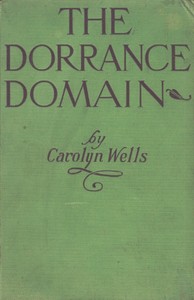
The Dorrance Domain — Context and Discussion
(0 User reviews)
1335
Project Gutenberg
2012
Not confirmed
Orphans -- Juvenile fiction; Siblings -- Juvenile fiction; Grandmothers -- Juvenile fiction; Families -- Juvenile fiction; Grandparents as parents -- Juvenile fiction
Readers of public-domain and historical texts
Project Gutenberg digital edition
en
Edition facts
Words
55,337
Reading time
241 min
Text sections
6
For The Dorrance Domain — Context and Discussion, the stored edition analysis reports 55,337 words, 4 hr 1 min estimated reading time, and 6 detected text sections.
The text analysis averages about 16.1 words per sentence, while the detected sections provide another way to judge how the source is divided.
Project Gutenberg metadata also associates the work with “Orphans -- Juvenile fiction,” connecting these edition facts with the source record’s subject description.
Source:
Project Gutenberg record #39081
This editorial note examines how Carolyn Wells uses repeated complaints, financial anxiety, and spatial metaphors to structure The Dorrance Domain, focusing on the movement from cramped boarding-house to rural hotel and the recurring image of the horse as a contested asset.
Read the complete public-domain text at its original source.
Read on Project GutenbergThe Dorrance Domain opens with a ritual: four children and their grandmother each repeat the same wish—'I wish we didn't have to live in a boarding-house!'—in a scene that establishes both the family’s collective discontent and the book’s structural reliance on repeated, escalating complaints. The passage immediately signals that the story will pivot on a desire for space, both literal and financial. From the cramped Manhattan boarding-house to the eventual move to a rural hotel, the narrative traces a geography of constraint and release, where every new setting brings fresh anxieties about money and belonging.
The Chorus of Complaint
The opening chapter, 'Cooped Up,' introduces a pattern that recurs throughout the excerpts: a single grievance is voiced by one character, then echoed by others in a descending order of age. Dorothy speaks first, Lilian responds, Leicester mimics, and Fairy sighs. This choral structure gives the family’s discontent a ritual quality, as if the complaint itself is a shared performance. The repetition of 'I wish we didn't have to live in a boarding-house' across four voices—each with a slightly different inflection—creates a rhythm that Wells returns to in later scenes, such as when Fairy’s crying is described as 'a succession of loud wails' that the others laugh at. The pattern suggests that the Dorrances process frustration through collective vocalization, not quiet reflection.
Money as a Moving Force
Financial worry is not merely a theme but a structural engine. In Chapter XIV, Grandma Dorrance announces that bills from Mr. Hodges and Mr. Hickox have mounted, and the family may need to sell their Fifty-eighth Street house. This revelation triggers a cascade of reactions: Dorothy feels responsibility, Leicester offers to leave school, and Fairy proposes selling the horse—a suggestion that is laughed off but lingers as a symbol of the family’s assets. The horse appears repeatedly as a contested object: it is not theirs to sell, yet it represents both luxury and burden. Wells uses money troubles to propel decisions, such as the move to the Dorrance Domain itself, and to create tension between the children’s dreams and their grandmother’s helplessness.
Spaces of Constraint and Release
The narrative moves between confined interiors and open landscapes, each described with attention to physical limits. Leicester’s complaint about 'cramped space' and a 'shut-up-in-your-own-room feeling' is literal: the boarding-house offers no room to roam. His fantasy of Texas—'a great deal more room to the square yard'—shows how the children imagine space as a solution to their discontent. Later, the hotel in the country represents a release, but it brings new constraints: the horse is an added expense, and the hotel itself cannot be sold. Wells maps emotional states onto physical settings, so that the family’s financial straits are felt as a lack of room, and their hopes are tied to the possibility of owning or selling property.
The Horse as a Recurring Image
Though the excerpts do not reveal the horse’s ultimate fate, it appears as a charged object in at least two scenes. In the financial discussion, Fairy’s earnest suggestion to 'sell the horse' is met with laughter, but Grandma Dorrance corrects her: 'the horse isn’t ours.' The horse is thus both a potential solution and a reminder of the family’s limited ownership. Earlier, Leicester mentions the horse as an added expense alongside servants and company. The animal becomes a shorthand for the family’s precarious position: they have it, but cannot freely dispose of it. This recurring image ties together the themes of ownership, responsibility, and the gap between desire and reality that runs through the narrative.
Readers attentive to structure will notice how Wells builds each chapter around a problem—a complaint, a bill, a plan—that is voiced, debated, and then deferred. The movement from boarding-house to hotel does not resolve the family’s troubles but shifts their shape. Pay attention to the way objects like the horse or the town house reappear as markers of what the Dorrances can and cannot control. The book rewards a focus on these recurring elements rather than on plot twists.
I keep thinking about that old nag in the editorial note, how the horse becomes this quiet symbol of everything slipping away. It reminded me of another story where the coast itself feels like a contested place, caught between memory and ruin. The Wreck of the Red Bird: A Story of the Carolina Coast — Reading Companion carries that same ache, the way a landscape holds what we can’t quite name. It lingered, softly.
There are no reviews for this eBook.
There are no comments for this eBook.
Reader reflection
What did you think of this book?
Answer a few questions and save a private reflection on this device.
Your progress
0
/
10
2
How did the book work for you overall?
3
Would you encourage someone else to read it?
4
How much effort did this book require?
5
How would you describe its reading pace?
6
Would you like to discuss this book with someone?
7
How clear did the writing feel?
8
Did the book meet your expectations?
9
What changed or sharpened your thinking?
10